PART 1
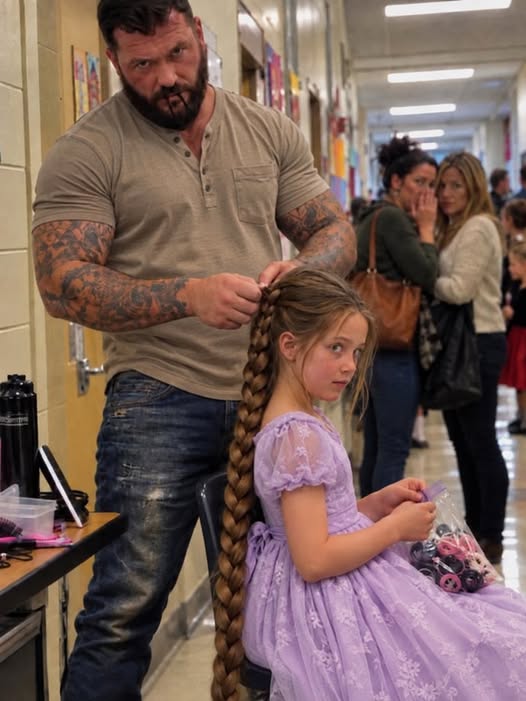
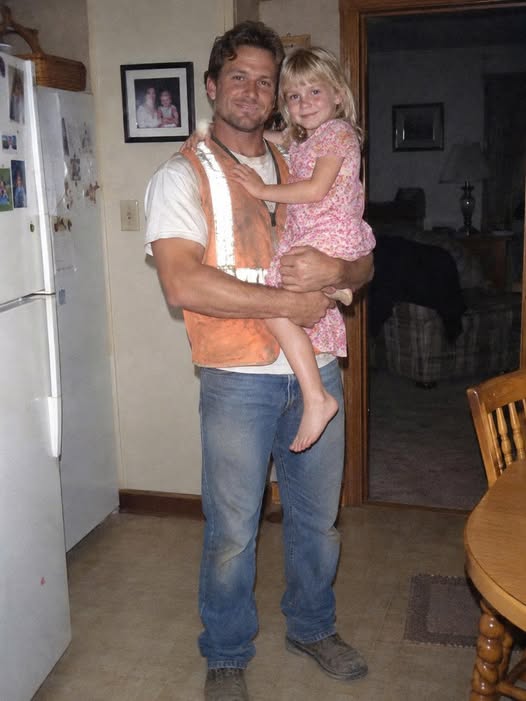
My earliest memories of my dad all looked the same. Steel-toe boots by the front door. A faded orange construction vest hanging on a chair. Hands so rough they felt like sandpaper whenever he tucked me into bed.
He’d been studying engineering when I was born.
Then one ordinary Tuesday, my mother kissed me on the forehead, grabbed her purse, and said she was running to the grocery store.
She never came home.
Dad dropped out of college the following week.
There was no dramatic speech. No complaints. He simply traded textbooks for a hard hat.
We lived in the same tiny rented apartment my entire childhood. Every month was a struggle. Dad always insisted he wasn’t hungry whenever there wasn’t enough food for both of us. His work boots were held together with glue long after they should have been replaced, and I don’t remember him ever buying himself new clothes. Even on Christmas morning, he’d somehow convince me that watching me open presents was all he wanted.
When I asked why he worked so much, he’d kiss the top of my head.
“”Because you’re worth every sore muscle, Daddy’s Bug.””
That was his nickname for me.
Daddy’s Bug.
I promised myself that one day I’d give him everything he’d sacrificed for me.
A better apartment. A vacation. A chance to finally rest.
I never got the chance.
When I was twenty-five, Dad was diagnosed with late-stage cancer.
Eight months later, I buried the only parent who had ever truly loved me.
After the funeral, his lawyer asked me to stay behind.
“”I’ve been instructed to give this to you,”” he said quietly, placing an ordinary plastic grocery bag into my hands and a note with my name written in Dad’s familiar handwriting.
My fingers trembled as I unfolded it.
There was only one sentence.
“”Daddy’s Bug, I hope you’ll forgive me after you see what’s inside.””
I looked inside the bag… and gasped.
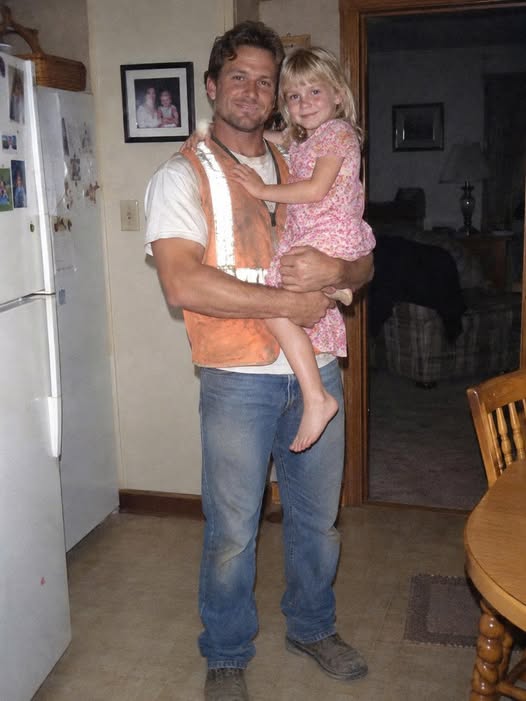
Inside the grocery bag was a photograph, a small brass key, a thick stack of documents tied together with a rubber band, and the faded plastic ladybug keychain I had given Dad when I was six years old. I picked up the photograph first. Dad stood on one side, looking barely twenty. My mother stood beside him. Between them was a baby wrapped in a yellow blanket. Me.
But it was the man standing behind my mother who made me stop breathing. He wore an expensive dark suit and had one hand resting possessively on her shoulder. Someone had written three words across the bottom of the photograph in Dad’s handwriting. “Your biological father.” I read the sentence twice before my brain finally understood what the words were telling me. Dad was not my biological father.
My knees weakened so suddenly that the lawyer reached for my arm. I pulled away, not because I was angry with him, but because I needed something solid to hold on to that was not another human being. I lowered myself into the chair and stared at the photograph until all four faces blurred together. “No,” I whispered. “That’s impossible.” The lawyer said nothing.
I grabbed the stack of documents with shaking hands. The first page was a laboratory report dated only three months after I was born. My name appeared near the top. Dad’s name appeared below it. The final line was impossible to misunderstand. Probability of biological paternity: 0.00%. Beneath the report was my birth certificate. Dad’s signature was still there. Father: Ethan Collins.
I covered my mouth and made a sound I had never heard myself make before. Suddenly every memory of him seemed to change shape without actually changing meaning. Dad teaching me to ride a bike. Dad sleeping in a plastic chair beside my hospital bed when I had pneumonia at nine. Dad showing up to every school concert in dusty work clothes because he never had time to change.
He had known.
He had known I wasn’t his.
And he stayed anyway.
My eyes dropped back to the grocery bag. There was another envelope underneath the papers. This one had been sealed, then opened, then sealed again with yellowing tape. On the front, Dad had written, “When you know about the test, read this next.” I tore it open so quickly I nearly ripped the paper inside.
His handwriting covered four pages.
“Daddy’s Bug, if you’re reading this, then I’m gone, and you’ve just discovered the first thing I spent twenty-five years being afraid to tell you. I’m sorry. You deserved the truth. But every time I tried to imagine telling a little girl that the man she called Dad wasn’t her biological father, all I could picture was you wondering whether that made you less mine.”
Tears landed on the page.
Dad had continued.
“It didn’t. Not for one second.”
I pressed my fist against my mouth.
“You were mine the first night I held you. You were mine when you wrapped your tiny hand around my finger. You were mine when you threw cereal across our kitchen at eleven months old. You were mine when you screamed through your first haircut. Biology never entered the room. But there is more, Bug. And this is the part I truly need you to forgive me for.”
I stopped reading.
Something cold moved through my chest.
The lawyer quietly pushed a box of tissues toward me.
I wiped my face and continued.
“Your mother did not disappear the way I told you she did.”
For twenty years, the story had been sacred. Mom kissed me. Mom picked up her purse. Mom said she was going to buy milk. Mom never came home. Dad had repeated those facts every time I asked until eventually I stopped asking. He had never insulted her. Never told me she was selfish. Never poisoned me against her.
He had only said, “Some people leave because they don’t know how to stay.”
Now I stared at his letter.
“She came back that night.”
The room went completely silent.
I looked at the lawyer.
He lowered his eyes.
I read the sentence again.
“She came back?”
My voice cracked.
Mr. Cole nodded once.
“Your father told me you would probably ask that.”
I felt anger for the first time since the funeral.
Not sadness.
Not confusion.
Anger.
“He told you?”
“Yes.”
“And you knew?”
“For seventeen years.”
I stood so quickly the chair scraped across the floor. “Everyone knew except me?”
“No,” he said firmly. “Very few people knew. Your father. Me. Your mother. Two other attorneys. And your maternal grandfather.”
I froze.
“My grandfather?”
Mr. Cole looked toward the brass key still lying inside the bag.
“Your father wanted the rest to come from him, not me.”
I wanted to scream.
Instead, I picked up the letter.
“Your mother came home around eleven that night,” Dad had written. “You were asleep. I was sitting on the floor beside your crib because I had spent five hours believing something terrible had happened to her. When she walked through the door, she wasn’t carrying groceries. She was carrying a suitcase.”
I pictured our tiny apartment years before I could remember it. Dad on the floor. A baby asleep nearby. My mother standing in the doorway with luggage.
“She told me she was leaving.”
My hands tightened around the paper.
“She also told me you weren’t biologically mine.”
The next lines had been crossed out, then rewritten.
“I wish I could tell you I handled that news like the man you believed I was. I didn’t. I shouted. I cried. I said things I’m ashamed of. Then I asked her the only question that mattered. Was she taking you?”
I stopped breathing again.
“She said no.”
Those three words hurt worse than the DNA test.
Dad continued.
“She said she had received an opportunity to start over and that a baby would complicate everything.”
I lowered the letter.
My entire childhood I had invented reasons for why Mom left. Maybe she was scared. Maybe she had been depressed. Maybe somebody had threatened her. Maybe she had amnesia. Children become experts at creating explanations that hurt less than the obvious one.
I had never imagined the explanation could simply be me.
Mr. Cole seemed to know what I was thinking.
“Keep reading,” he said softly.
I hated him for saying it.
But I did.
“I told her she couldn’t simply abandon her daughter. She looked at me and said something I never repeated to you because I knew it would follow you for the rest of your life. Bug, please understand that what someone says about you does not determine your value.”
I stared at the next sentence for several seconds before forcing myself to read it.
“She said, ‘Then you keep her. You already love her more than I do.’”
I folded forward in the chair.
For a long time, I could not read another word.
I cried with my forehead against Dad’s letter and my hands over my face. Not politely. Not quietly. The grief came out of somewhere that had been waiting since I was old enough to understand what abandonment meant.
Then another feeling rose underneath it.
Dad had heard those words too.
At twenty-one years old.
He had just learned his girlfriend had cheated on him.
He had just learned the baby he loved was not biologically his.
And when given the easiest possible escape, he had chosen me.
I lifted the letter again.
“I told her to go.”
Dad’s writing became shakier there.
“I regret that sentence. Not because I wanted her to stay with me. That relationship was finished. But I should have fought harder to make her understand what she was giving up. Maybe I should have forced her to look at you one more time. Maybe I should have called her parents immediately. Instead, I held you while she packed the rest of her things.”
Dad wrote that Mom had stood over my crib before leaving.
She did not pick me up.
She did not kiss me.
She simply stared.
Then she walked out.
Dad sat awake until sunrise.
At seven in the morning, he called the university and withdrew from every class.
At eight thirty, he called a construction foreman who had once offered him summer work.
At nine fifteen, he sold his textbooks.
By noon, he had a job.
I had always known Dad left college for me.
I had never understood that he had made the decision less than twelve hours after learning I was not biologically his.
The letter continued.
“I told people your mother disappeared because I was angry, embarrassed, and terrified. I also thought it was kinder than telling you she had chosen to leave. Later, when you became old enough to ask questions, I almost told you the truth many times. But then something happened that made everything more complicated.”
I looked toward the brass key.
Dad’s next sentence explained it.
“Your maternal grandfather found us.”
I had never known my mother’s parents.
Dad told me once that they lived overseas and had never been interested in us.
That had been another lie.
Three weeks after Mom left, a black sedan stopped outside our apartment building.
A man named Richard Whitmore stepped out.
He was my grandfather.
And according to Dad, he was furious.
Not with Dad.
With his daughter.
Richard Whitmore had built a nationwide commercial development company from one small concrete business. The name meant nothing to me when I first read it.
Then Mr. Cole quietly said, “Whitmore Development.”
I looked up.
Even I knew that name.
Their logo appeared on shopping centers, apartment buildings, office towers, hotels, and construction sites across several states.
My mother had grown up in that family.
I had spent childhood winters wearing coats from thrift stores while my mother’s family owned buildings worth hundreds of millions of dollars.
But Dad’s letter warned me immediately.
“Do not assume money is the secret.”
It wasn’t.
My grandfather had learned about me only after Mom returned home without a baby. She had apparently told her parents that Dad and I had moved away.
Her father did not believe her.
He hired someone to find us.
When Richard arrived at Dad’s apartment, he brought two lawyers and a folder.
Dad assumed they had come to take me.
He refused to open the door.
Eventually my grandfather sat on the hallway floor outside our apartment for nearly an hour until Dad agreed to speak with him.
The folder contained three things.
A copy of the paternity test.
The name of my biological father.
And evidence that my mother had lied to everyone involved.
The man in the photograph was named Adrian Mercer.
He had been twenty-four at the time, already engaged to someone else, and working for his own wealthy family’s investment firm.
My mother and Adrian had been involved for almost a year.
When she became pregnant, neither of them knew whether Dad or Adrian was the father.
Dad did not know there was any uncertainty.
Adrian did.
My mother did.
After I was born, they secretly ordered the DNA test.
Adrian was confirmed as my biological father.
What happened next made my stomach turn.
He did not want anyone to know.
His engagement was about to become a marriage. His family had business relationships with my mother’s family. A public scandal could have caused problems for both households.
So he offered my mother money.
Not child support.
Not money for me.
Money for silence.
Dad had included a copy of the transfer.
Two hundred fifty thousand dollars.
My mother accepted it.
Then she left.
I stared at the number until it became meaningless.
Dad had been repairing the same boots with construction adhesive while the woman who gave birth to me walked away with a quarter of a million dollars because my existence was inconvenient.
But the story still wasn’t finished.
When Richard Whitmore discovered what his daughter had done, he threatened to expose both families.
My mother begged him not to.
Adrian’s family sent attorneys.
Then something happened that nobody expected.
My grandfather chose Dad.
Not his daughter.
Not the biological father.
Dad.
According to the documents, Richard Whitmore had looked at the twenty-one-year-old college dropout holding a baby who wasn’t biologically his and asked him one question.
“Do you want to raise her?”
Dad answered immediately.
“Yes.”
My grandfather asked again.
“Even after what you learned?”
Dad apparently became angry.
He said, “Stop asking me that like DNA changed who she is.”
That sentence appeared twice in the legal notes.
My eyes filled again.
Richard Whitmore spent the next six months helping Dad secure permanent legal custody.
My mother voluntarily signed away her parental rights.
Adrian Mercer signed a formal acknowledgment that he would not seek custody.
Dad then completed a legal adoption process that made him my father in every way that mattered under the law.
I looked at Mr. Cole.
“So my birth certificate…”
“Was amended after the adoption.”
“He chose to put his name there.”
“Yes.”
“He could have walked away.”
“Yes.”
“He was twenty-one.”
“Yes.”
I lowered my head.
My father had been younger than I was now.
At twenty-five, I still called him when my sink made strange noises.
At twenty-one, Dad had been betrayed by the woman he loved, dropped out of engineering school, entered construction, hired attorneys, changed diapers, worked overtime, and fought two wealthy families to keep a child who wasn’t biologically his.
I thought that was the biggest secret.
It wasn’t.
Dad’s letter told me to take the brass key to First Federal Bank and ask for safe-deposit box 417.
Mr. Cole already had an appointment scheduled.
We went that afternoon.
I almost refused.
I was exhausted from discovering that half my childhood had been built on lies told for reasons I was not sure I understood.
But something kept pushing me forward.
Maybe anger.
Maybe love.
Maybe the terrible knowledge that Dad had anticipated every moment of this day and had arranged a trail for me to follow after he could no longer explain himself.
Box 417 was long and narrow.
The bank employee placed it inside a private room and left.
Mr. Cole stayed near the door.
“You should open it,” he said.
Inside were twenty-five envelopes.
Each one had a year written on the front.
Age 1.
Age 2.
Age 3.
All the way through twenty-five.
At first, I thought they were birthday letters from Dad.
They weren’t.
Every envelope was addressed to my mother.
And every single one had been returned unopened.
I picked up the first.
The original stamp was twenty-four years old.
Dad’s handwriting covered the front.
Vanessa Whitmore.
The return address was our tiny apartment.
I opened it.
“Vanessa, she turned one today. She has four teeth and hates peas. She laughs whenever the washing machine shakes. I know you asked me not to contact you, but I’m sending this because one day you might regret missing these things.”
The second letter included a photograph of me wearing a paper birthday crown.
“She turned two. She calls every dog ‘Bobo’ for reasons I cannot explain. She still has your eyes. If you want to see her, call me.”
Age three.
“She asks about mothers now. I told her some families look different. I did not tell her anything bad about you. The door is still open.”
Age five.
“She starts kindergarten next week. She is terrified but pretending she isn’t. If you want to be there, I won’t stop you.”
Age eight.
“She lost her first big tooth and cried because she thought the tooth fairy wouldn’t know our apartment number. She still asks about you sometimes.”
Age eleven.
“She won the science fair.”
Age thirteen.
“She thinks she hates me because I won’t let her stay out past midnight. I think that means I’m doing something right.”
Age sixteen.
“She got her driver’s license. Please pray for every mailbox in our neighborhood.”
I laughed through my tears.
Then I reached age eighteen.
The envelope had not been mailed.
Instead, Dad had written across it:
“Returned before sending. Vanessa’s attorney threatened a restraining order against further contact.”
Inside was only one page.
“You’ve missed everything.”
No anger.
No insult.
Just those three words.
I opened age twenty-five last.
Dad had written the letter less than four months before his diagnosis.
“Vanessa, this will be the final letter. She is twenty-five now. She became the kind of person you would be proud to know. I hope one day you understand that I never kept her from you. I only stopped begging you to care.”
I sat in that bank room and sobbed.
Dad had lied to me.
But not in the way I first feared.
He had not hidden a loving mother who spent decades trying to find her child.
He had spent years trying to convince her to come back.
She had refused.
Mr. Cole reached into the safe-deposit box and lifted another folder.
“There’s more.”
I almost laughed because the phrase had become unbearable.
“How can there possibly be more?”
He handed me the folder.
A financial institution’s name appeared across the top.
Whitmore Family Trust.
Beneficiary: Maya Collins.
My name.
I stared at him.
“What is this?”
“Your grandfather created it.”
The trust had been established when I was two years old.
Its original value had been $900,000.
That number alone made me dizzy.
But the account had remained invested for more than two decades.
I looked at the current balance.
$11,842,617.
I thought I had misread it.
Then I counted the digits again.
Eleven million.
Eight hundred forty-two thousand.
Six hundred seventeen dollars.
I dropped the folder.
“No.”
Mr. Cole picked it up.
“It became fully yours on your twenty-fifth birthday.”
“That was seven months ago.”
“Yes.”
“Dad knew?”
“Yes.”
“Why didn’t he tell me?”
“Because your grandfather attached conditions.”
The trust could not be revealed to me before age twenty-five unless it was required for a major medical emergency.
Dad had been appointed guardian of my interest but had no authority to withdraw money for himself.
“He could have used some of it for me,” I said.
“Possibly, under certain circumstances.”
“But he didn’t.”
“No.”
I thought about our apartment.
The winter our heater broke and Dad slept in his coat because we could afford only one portable space heater.
The year he took extra weekend shifts because I needed braces.
The month his truck died and he rode two buses to construction sites before sunrise.
“He knew this money existed?”
“Yes.”
“Why would he let us struggle?”
Mr. Cole hesitated.
Then he slid another letter toward me.
This one was from my grandfather to Dad.
Ethan,
The trustees will approve reasonable requests for Maya’s education, health, and essential needs. Please do not confuse pride with responsibility. Ask when she needs something.
Dad had written a reply on the back.
She needs a father who can provide for her more than she needs an inheritance to provide for us.
Richard’s response appeared underneath.
Stubborn idiot.
For some reason, that broke me more than anything else.
I laughed.
Then cried again.
Then something occurred to me.
“If the trust became mine seven months ago, why didn’t anyone contact me?”
“They tried.”
Mr. Cole removed another document.
Three letters had been sent to an address I had moved out of the previous year.
The trust administrator had then contacted Dad.
By that point, Dad had already received his diagnosis.
“He asked them to wait,” Mr. Cole explained. “He wanted to tell you himself.”
“Why didn’t he?”
“He kept believing he had more time.”
Eight months.
Cancer had taken eight months from diagnosis to funeral.
Dad spent the first six telling everyone he was going to beat it.
During the seventh, he finally admitted he might not.
By the eighth, he could barely speak.
I closed my eyes.
“He was trying to protect me until the end.”
Mr. Cole looked at me for several seconds.
“Yes.”
I thought the revelations were finished.
Then my phone rang.
Unknown number.
I nearly ignored it.
Something made me answer.
“Hello?”
A woman inhaled sharply on the other end.
For several seconds neither of us spoke.
Then she said my name.
“Maya?”
I knew.
I cannot explain how.
Maybe blood recognizes blood.
Maybe grief makes imagination dangerous.
Maybe I simply remembered a voice from a dream I did not know I had kept.
“Who is this?”
The woman started crying.
“My name is Vanessa.”
My entire body went cold.
My mother.
The woman who had disappeared twenty-four years earlier was calling me on the same day I learned she had never really disappeared at all.
“I heard about Ethan,” she whispered. “I’m so sorry.”
I looked at the returned letters spread across the table.
Twenty-five envelopes.
Twenty-five attempts.
Twenty-five refusals.
“How did you get my number?”
Silence.
Then she said, “I think we need to talk.”
I almost hung up.
But something inside me wanted to hear her explanation.
Not because I expected forgiveness.
Because for twenty-five years, the woman had lived inside my imagination.
Now I wanted reality.
“Tomorrow,” I said.
We agreed to meet at a hotel café downtown.
I told nobody except Mr. Cole.
He surprised me by advising against going alone.
“Do you think she’s dangerous?”
“No.”
“Then why?”
He looked at the trust paperwork.
“Your mother has known about your twenty-fifth birthday for a very long time.”
That sentence followed me home.
I barely slept.
Dad’s apartment looked exactly as he had left it. His boots were still beside the door. The faded construction vest still hung over the kitchen chair because I had not found the strength to move anything yet.
I sat on his bed holding the ladybug keychain.
Six-year-old me had bought it at a school fair for fifty cents.
I remembered presenting it to Dad like it was treasure.
He had immediately attached it to his truck keys.
Twenty years later, he still had it.
I whispered into the empty room.
“Why didn’t you tell me?”
Of course, he didn’t answer.
The next morning, I arrived at the hotel twenty minutes early.
My mother was already there.
I recognized her immediately.
She was fifty now, but she still had the same eyes as the woman in the photograph.
My eyes.
She stood when she saw me.
Her hand flew to her mouth.
“Oh my God.”
I remained several feet away.
Vanessa looked elegant in a cream coat, tailored trousers, and shoes that probably cost more than Dad’s monthly rent had when I was little.
She started toward me.
I stepped back.
She stopped.
“I’m sorry.”
Those were her first words to me.
Not hello.
Not you look beautiful.
Not I missed you.
I’m sorry.
We sat.
For nearly a minute, neither of us touched the coffee.
Finally she whispered, “You look like me.”
I thought of Dad’s letters.
He had written the same thing.
“She has your eyes.”
I stared at her.
“You knew Dad died?”
Vanessa’s expression tightened.
“Yes.”
“How?”
“I stayed informed.”
The answer made something inside me harden.
“You stayed informed?”
“I know that sounds terrible.”
“You didn’t stay involved. But you stayed informed.”
She looked away.
“I was young.”
“So was he.”
That landed.
Her mouth closed.
“He was twenty-one,” I continued. “And he wasn’t even my biological father.”
She looked back at me quickly.
“So you know.”
“Yes.”
Vanessa started crying again.
“I never wanted you to find out this way.”
“How did you want me to find out?”
No answer.
“When I was five?”
Silence.
“Ten?”
Nothing.
“Eighteen?”
Her eyes dropped.
“Twenty-five?”
She whispered, “I made mistakes.”
I reached into my bag.
Then I placed Dad’s first returned letter on the table.
Her face changed.
Not sadness.
Recognition.
I added the second.
Then the fifth.
Then the eighth.
Then the eighteenth.
Vanessa stared at the envelopes.
“Dad kept copies.”
Her lips parted.
“He wrote to you every year.”
“Maya—”
“You returned them.”
“It wasn’t that simple.”
“Tell me how it was complicated.”
She drew a trembling breath.
“My family was falling apart. Adrian was getting married. My father was furious. There were attorneys everywhere. I was scared.”
“You were scared for twenty-five years?”
“That’s not fair.”
I almost laughed.
“Fair?”
Several people glanced toward us.
I lowered my voice.
“My father carried concrete in summer heat so I could eat. He went to parent-teacher meetings covered in dust because if he stopped working early we couldn’t pay rent. He glued his boots together. He skipped meals. He gave up engineering school. You were scared?”
Vanessa wiped her face.
“I thought you would be better without me.”
“Then why call now?”
She hesitated.
Only for half a second.
But I saw it.
And suddenly Mr. Cole’s warning came back.
Your mother has known about your twenty-fifth birthday for a very long time.
I leaned back.
“You know about the trust.”
Vanessa stopped crying.
The change was tiny.
But unmistakable.
Her shoulders stiffened.
Her eyes became careful.
“Of course I know.”
There it was.
For the first time, I saw the woman Dad had known.
Vanessa reached across the table.
I moved my hand away.
“My father created that trust,” she said. “There are things about it you probably don’t understand.”
“I understand eleven million dollars.”
Her face tightened.
“It isn’t about the money.”
“Then why did you mention the trust before asking what my favorite color is?”
She went silent.
I stood.
Vanessa reached for my wrist.
“Maya, wait.”
I looked down at her hand.
She let go.
“I loved you,” she said.
I thought about the crib.
The suitcase.
Then you keep her.
You already love her more than I do.
“Dad wrote down what you said the night you left.”
Her face went pale.
“He was angry.”
“Did you say it?”
“Maya—”
“Did you say it?”
She stared at me.
“Yes.”
The word barely escaped.
I nodded.
Then I walked away.
I made it halfway across the lobby before she called after me.
“There’s something Ethan didn’t tell you!”
I stopped.
Of course there was.
I turned.
Vanessa was standing beside the table.
“Your father wasn’t as innocent as you think.”
The sentence hit exactly where she intended.
“What does that mean?”
She gathered her purse.
“He made a deal with my father.”
I walked back slowly.
“What deal?”
“Ask your lawyer.”
Then she left.
I called Mr. Cole before I reached my car.
“What deal did Dad make with Richard Whitmore?”
He was silent long enough that I knew Vanessa had found the one weapon capable of hurting me.
“Maya—”
“Tell me.”
“I’d prefer to show you.”
“Today.”
An hour later, I was back in his office.
A contract waited on the table.
Dad had signed it twenty-three years earlier.
Richard Whitmore had signed beneath him.
The agreement stated that Dad would receive one hundred fifty thousand dollars in exchange for several conditions.
He would never publicly reveal my biological paternity.
He would never contact the press.
He would never identify Adrian Mercer as my biological father without my permission after adulthood.
And he would raise me outside the Whitmore family’s public influence.
I stared at the first line again.
One hundred fifty thousand dollars.
“He took money?”
“Yes.”
Something inside me collapsed.
Dad had always told me we were broke.
Had he secretly been sitting on money?
“Where did it go?”
Mr. Cole opened another folder.
A bank statement.
The full amount had been deposited three days after the agreement.
Seven days later, nearly all of it was gone.
My chest tightened.
“Where?”
Mr. Cole pointed to the transfer recipient.
Collins Legal Services Escrow.
Dad had used almost every dollar on attorneys.
Custody specialists.
Adoption fees.
Court costs.
Private investigators.
He had used the money to fight the same people who paid him.
The remaining seventeen thousand dollars had gone into an education account in my name.
Dad never spent one dollar of the payment on himself.
Vanessa had told the truth.
Technically.
Dad had made a deal.
She had simply left out why.
I laughed bitterly.
“That’s what she meant.”
Mr. Cole nodded.
“She has always been skilled at telling technically accurate fragments.”
I looked at the contract again.
Then another clause caught my attention.
Paragraph twelve.
“If Vanessa Whitmore or Adrian Mercer initiates legal proceedings intended to obtain control over Maya Collins’s trust after Maya reaches twenty-five years of age…”
I stopped.
“What is this?”
Mr. Cole leaned back.
“That is the reason I told you not to sign anything your mother gives you.”
The clause stated that any attempt by my biological parents to gain control of my trust would trigger a secondary provision in Richard Whitmore’s estate.
I stared at him.
“What secondary provision?”
He slid another document across the table.
When my grandfather died, most of his company shares had gone to family members.
Vanessa had received sixteen percent.
But four percent had been placed in a conditional reserve.
If she attempted to interfere with my trust after adulthood, the reserve transferred to me.
I shook my head.
“She hasn’t filed anything.”
“Not yet.”
My phone vibrated.
Unknown email.
The subject line read:
Documents for tomorrow’s meeting.
There was an attachment.
I opened it.
A legal petition.
Vanessa Whitmore and Adrian Mercer were seeking an emergency review of the trust.
Filed forty-seven minutes earlier.
I stared at the screen.
Mr. Cole exhaled.
“Well.”
“What?”
He turned the secondary provision toward me.
“She just triggered it.”
My mother had waited twenty-five years to return.
Then, less than twenty-four hours after our first meeting, she had tried to gain control of my inheritance.
And by doing so, she had accidentally transferred part of her own inheritance to me.
But even that wasn’t the most shocking part.
I tapped Adrian Mercer’s name.
“My biological father filed this too.”
“Yes.”
“He knows about me?”
“He always has.”
I felt strangely calm.
“Has he ever tried to contact me?”
Mr. Cole did not answer.
That was answer enough.
“Not once?”
“No.”
I looked out the window.
Two biological parents.
Alive.
Wealthy.
Informed.
Neither had attended one birthday.
Meanwhile, the man with no biological connection to me had spent his life making sure I never felt unwanted.
I should have hated Vanessa and Adrian.
Instead, I felt something worse.
Nothing.
They were strangers.
The hearing was scheduled for three days later.
I spent those days cleaning Dad’s apartment.
Not because I was ready to let him go.
Because I needed to understand him.
Every drawer became an archaeological site.
Receipts.
Old photographs.
School certificates.
Birthday cards I had made him.
He had kept everything.
In the bottom drawer of his dresser, I found a folder labeled UNIVERSITY.
Inside was his engineering transcript.
Dad had been an exceptional student.
A 3.89 GPA.
Two professor recommendations.
A scholarship renewal form he had never submitted.
Then I found something I had never seen before.
An acceptance letter dated twelve years after he dropped out.
Evening Engineering Program.
Dad had applied to finish his degree when I was twelve.
My heart lifted.
Then I saw the withdrawal form.
Submitted three weeks later.
Reason:
Unable to attend due to childcare and work scheduling.
I remembered that year.
I had joined a travel soccer team.
Practices were three nights a week.
Dad never missed one.
I sat on the bedroom floor staring at the withdrawal form until my vision blurred.
He had tried to return.
And once again, I had unknowingly become the reason he stepped away.
I hated that thought immediately.
Dad would have hated it too.
So I kept searching.
At the bottom of the folder was a handwritten note.
“Someday, Bug goes to college. That’s enough engineering for one family.”
I laughed.
Then cried again.
The night before the hearing, Vanessa came to Dad’s apartment.
I almost did not open the door.
She stood in the hallway wearing sunglasses despite the darkness outside.
“Please,” she said.
I let her in.
Her eyes moved across the apartment.
The worn sofa.
The cheap kitchen table.
Dad’s boots.
Something changed in her expression.
“This is where you lived?”
“For nineteen years.”
She walked slowly toward the kitchen.
“He stayed here all that time?”
“Yes.”
Vanessa touched the back of one chair.
“He could have asked my father for more.”
“He didn’t.”
“He was always proud.”
“You mean responsible?”
Her mouth tightened.
“I didn’t come here to fight.”
“Why did you file the petition?”
She turned.
“Because that trust should never have gone entirely to you.”
There it was.
No more tears.
No more apologies.
Just truth.
“My father was angry with me when he created it.”
“So?”
“So he punished me through you.”
I almost smiled.
“Interesting interpretation.”
“You think I’m greedy.”
“I think you met your daughter for the first time yesterday and filed for control of her money before dinner.”
Vanessa’s expression hardened.
“You don’t know what I’ve been through.”
“You’re right.”
I walked toward Dad’s pile of returned letters.
“Because you never came back to tell me.”
She looked at them.
Then something strange happened.
She became angry.
“At least Ethan got to be the hero.”
I stared at her.
“What?”
“He got to sacrifice. He got to be noble. He got to tell everyone he stayed while I left.”
“He didn’t tell anyone.”
“You think that makes it better?”
“Yes.”
She laughed bitterly.
“You have no idea what he took from me.”
For the first time, I wondered whether there was one final secret.
“What did he take?”
Vanessa reached into her purse and removed a photograph.
She threw it onto the table.
Dad.
My grandfather.
And Vanessa.
I had never seen it.
She was crying in the picture.
Dad looked furious.
A courthouse stood behind them.
“This was taken the day I signed away my rights.”
I picked it up.
“He forced you?”
“No.”
The answer surprised me.
“My father did.”
She looked toward the window.
“He told me that if I didn’t sign, he would expose Adrian, destroy the Mercer partnership, cut me out of the family business, and make sure every newspaper knew what I had done.”
I said nothing.
Vanessa swallowed.
“I was twenty-three.”
“You were old enough to make choices.”
“Yes.”
Her voice sharpened.
“And Ethan got to make his choice too.”
“He chose me.”
“He chose being right.”
The sentence hung between us.
Then Vanessa said something I did not expect.
“I came back.”
I froze.
“What?”
“Five years later.”
My pulse changed.
“I came back when you were six.”
Dad had never mentioned that.
“I went to this apartment,” she continued. “I asked to see you.”
“What did he say?”
Vanessa stared at me.
“He said no.”
For the first time since opening that grocery bag, I felt something dangerous crack inside my certainty.
Dad had written that the door was always open.
Dad had sent letters.
Dad had begged her to visit.
Had he lied about that too?
Vanessa watched my face.
“He never told you.”
“No.”
“I thought not.”
She reached for her purse.
“Ask your lawyer about May seventeenth. The year you turned six.”
Then she walked out.
I barely slept.
At eight the next morning, I called Mr. Cole.
“Did my mother come back when I was six?”
Silence.
“Yes.”
The word nearly knocked me over.
“Dad turned her away?”
“Yes.”
My stomach twisted.
“Why?”
“You need the whole story.”
“I’m getting tired of people saying that.”
“I know.”
“Then tell me.”
Mr. Cole asked me to come to his office before the hearing.
When I arrived, a video cassette sat on his desk.
I stared at it.
“What is that?”
“Your grandfather recorded important family meetings.”
“That sounds healthy.”
Mr. Cole almost smiled.
“This one was recorded the day your mother came back.”
A television and old cassette player had been brought into the conference room.
He pressed play.
The picture flickered.
Then Dad appeared.
Thirty years old.
Work clothes.
Dust on his sleeves.
My grandfather sat beside him.
My mother entered the room.
She looked almost exactly as she had in the photograph from the courthouse.
Older.
More polished.
But unmistakably her.
My chest tightened.
Vanessa sat down.
The younger version of my father did not smile.
“You said you wanted to see Maya,” he said.
“I do.”
Dad leaned forward.
“Why now?”
“I’ve been thinking about her.”
“For five years?”
Vanessa flinched.
My grandfather interrupted.
“Answer his question.”
She glared at him.
Then she said, “Adrian and I are both divorced now.”
Everything inside me went still.
Dad understood immediately.
“So this is about Adrian.”
“No.”
“Then leave him out of it.”
Vanessa folded her arms.
“He wants to meet her.”
Dad stood so fast his chair moved backward.
“No.”
Vanessa shouted, “You don’t get to decide everything!”
Dad pointed toward her.
“He has known where she was for six years!”
“He wasn’t ready!”
“She was a baby!”
The recording crackled.
Then Dad said something I will remember until I die.
“She is not a door you can walk through whenever the rest of your life becomes inconvenient.”
Vanessa started crying.
“I’m her mother.”
Dad’s anger disappeared.
His face changed.
For a moment, he looked exhausted.
Then he sat down again.
“I know.”
“You said I could come back.”
“I did.”
“Then let me see her.”
Dad looked toward my grandfather.
Richard said nothing.
Finally Dad asked, “Do you want to be her mother?”
Vanessa hesitated.
Just slightly.
But Dad saw it.
So did I.
“I want to know her,” Vanessa said.
“That’s not what I asked.”
“I don’t know what you expect me to promise.”
Dad stared at her.
Then he asked, “If Adrian changes his mind next month, do you disappear again?”
No answer.
“If your business gets busy, do you disappear?”
Silence.
“If your next boyfriend doesn’t want a six-year-old around, do you disappear?”
Vanessa looked away.
Dad’s voice broke.
“I spent five years putting her back together from something she couldn’t even remember happening.”
My eyes filled.
“She used to stand at the window every time a woman walked toward our building because she thought it might be you.”
I covered my mouth.
I had forgotten that.
Or buried it.
Dad continued.
“She asked why every kid at school had a mom and she didn’t. She asked whether she had been bad. She asked whether you left because she cried too much as a baby.”
Vanessa began sobbing on the screen.
Dad wiped his own face.
“If you want to come back, come back permanently. Therapy. Visitation. Slowly. No Adrian until she knows you. No promises you don’t intend to keep.”
Vanessa whispered, “That could take months.”
Dad stared at her.
“She waited six years.”
Vanessa’s face changed.
That was the moment.
I saw it.
The moment she decided.
She stood.
“This was a mistake.”
My grandfather said her name.
She grabbed her purse.
Dad did not move.
Vanessa looked at him.
“You always wanted her.”
Dad answered quietly.
“Yes.”
Vanessa’s voice became cold.
“Then keep her.”
The screen went black.
I sat completely still.
Mr. Cole turned off the television.
Dad had turned her away.
But only after giving her a path back.
She had refused to walk it.
I understood then why he never told me.
If he had said, “Your mother returned when you were six,” I might have spent my childhood believing he kept her from me.
Instead, he had carried the blame himself.
Even in his final letter, he had not mentioned the meeting.
He had protected her again.
I wiped my face.
“Why didn’t he put this in the bag?”
Mr. Cole looked at the cassette.
“He hoped you would never need to see it.”
“Why?”
“Because Ethan believed knowing someone rejected you twice hurts more than believing they rejected you once.”
That sounded exactly like Dad.
The trust hearing took place later that morning in a private conference room because the matter had not yet escalated to open court.
Vanessa was there.
So was Adrian Mercer.
I recognized him from the photograph.
He was older now, silver-haired, perfectly dressed, and visibly uncomfortable.
My biological father looked at me as though he were studying a face in a museum.
“Maya.”
I stared at him.
He swallowed.
“You look like my mother.”
That was his first sentence to me.
Not hello.
Not I’m sorry.
Apparently biological relatives enjoyed commenting on faces.
I sat beside Mr. Cole.
Adrian’s attorney began speaking about “fair distribution,” “family intentions,” and “historical misunderstandings.”
I barely listened.
Then Adrian finally spoke directly to me.
“I think we’ve all made mistakes.”
I looked at him.
“We?”
His face tightened.
“I was young.”
“So was Dad.”
Vanessa closed her eyes.
Apparently that sentence was becoming inconvenient.
Adrian continued.
“I never had the opportunity Ethan had.”
I actually laughed.
Everyone looked at me.
“You had twenty-five years.”
His attorney interrupted.
“Maya, this isn’t about personal grievances.”
I turned toward him.
“You’re right.”
I placed the paternity acknowledgment on the table.
“It’s about documents.”
Adrian stopped speaking.
Then I placed his old affidavit beside it.
The one where he had formally declined custody.
Then the payment record.
Two hundred fifty thousand dollars.
His face lost color.
“You received money to keep me secret,” I said.
Vanessa whispered, “Maya…”
I turned toward her.
“And you received it.”
“That money is irrelevant.”
“No.”
I looked at both of them.
“It might be the most honest thing either of you ever did. You put an exact price on walking away from me.”
Nobody spoke.
Their attorney tried again.
“The trust itself is a separate matter.”
Mr. Cole smiled slightly.
“Yes.”
He opened a folder.
“It is.”
He explained paragraph twelve.
Vanessa’s attorney interrupted almost immediately.
“We disagree with that interpretation.”
“The trustees do not.”
Vanessa turned toward her lawyer.
“What is he talking about?”
Her lawyer whispered something.
I watched her face change.
Confusion.
Disbelief.
Then anger.
“What reserve?”
Mr. Cole slid the document across the table.
My grandfather had anticipated this exact scenario.
If Vanessa or Adrian attempted to challenge my control of the trust, four percent of Whitmore Development held in reserve would transfer immediately to me.
Vanessa stood.
“My father would never do that.”
“He did.”
“That stock belongs to me.”
“No,” Mr. Cole said. “It belonged to the trust.”
Vanessa looked at me.
For the first time, there was no sadness in her expression.
Only fury.
“You planned this.”
I stared at her.
“I didn’t even know you were alive four days ago.”
She turned on Mr. Cole.
“You manipulated her.”
He remained calm.
“The petition was filed by your attorneys.”
Adrian leaned toward his lawyer.
“What happens if we withdraw?”
Mr. Cole answered before anyone else could.
“The provision triggered upon filing.”
Adrian leaned back.
His face went blank.
Vanessa sat slowly.
The room became quiet.
Then Mr. Cole continued.
“There is one additional matter.”
Vanessa stared at him.
“What now?”
“The reserve shares carried voting rights.”
Her lawyer looked down at the documents.
I had no idea what that meant.
Then Mr. Cole turned to me.
“Combined with shares already placed inside your trust, you now hold just over twenty-one percent of Whitmore Development.”
Vanessa’s head snapped toward me.
I blinked.
“What?”
My grandfather had not only left me money.
He had left me ownership.
The room erupted.
Attorneys speaking.
Vanessa protesting.
Adrian demanding explanations.
I heard almost none of it.
All I could think about was Dad standing in a construction vest beneath the logo of companies his daughter unknowingly owned part of.
Then something clicked.
“Wait.”
Everyone stopped.
I looked at Mr. Cole.
“What construction company did Dad work for?”
He already knew why I was asking.
“Most recently?”
“Yes.”
“Benton & Hale.”
I knew that company.
They handled major commercial construction projects.
Including Whitmore developments.
Dad had spent years building structures that partially benefited the family who abandoned me.
I laughed.
It was too absurd not to.
Vanessa stared at me.
“You think this is funny?”
“No.”
I looked at her.
“I think Dad would.”
The petition was withdrawn that afternoon.
It did not reverse the stock transfer.
Vanessa left without saying goodbye.
Adrian tried to speak to me in the hallway.
“Maya.”
I kept walking.
“Please.”
I stopped.
He looked suddenly older.
“I would like an opportunity to explain.”
I studied him.
“For yourself?”
“For both of us.”
“You had twenty-five years.”
“I know.”
“Dad had one night.”
Adrian looked confused.
I continued.
“He had one night to decide whether a baby who wasn’t biologically his was still his daughter.”
I stepped closer.
“You had twenty-five years to decide whether your biological daughter was worth one phone call.”
He lowered his eyes.
“You both had time.”
Then I walked away.
I thought that would be the end.
It wasn’t.
Two weeks later, while continuing to clean Dad’s apartment, I found a metal box behind several paint cans in his closet.
Inside were construction pay stubs, medical papers, and an envelope addressed to me.
I recognized the handwriting immediately.
Dad.
The envelope was labeled:
“Only if she finds out everything.”
I sat on the floor.
My hands trembled.
Inside was another letter.
Of course there was.
“Bug,
If you found this, then Cole probably showed you the tape, which means Vanessa came back into your life and things got ugly enough that you needed the whole story. I’m sorry for leaving so many secrets behind. I promise I didn’t spend my life trying to deceive you. I spent it trying to give you a childhood that wasn’t built around adults who failed you.”
I cried before reaching the next paragraph.
“You might be angry that I told you your mother went for groceries and never came back. That story was technically true. She did say she was going to the grocery store. She just came back later with a suitcase and a truth I wasn’t prepared to hear.”
I almost laughed.
Even dying, Dad could not resist technical accuracy.
Then his tone changed.
“There is one last thing I never told anyone except Richard.”
I stopped.
One last thing.
Dad continued.
“The night Vanessa left, she said you were not mine. I believed her because the test said so. But around your second birthday, Richard asked if I wanted another test. He believed Adrian’s family had arranged the original one and did not trust them.”
My heart started pounding.
No.
I stood up without realizing it.
Dad’s next line blurred.
“I said no.”
I stared at the page.
“I said no because by then I understood something I wish more people understood. If the second test said I was your biological father, nothing would change. If it said I wasn’t, nothing would change. So I told Richard I didn’t care.”
I sat back down.
Tears spilled onto my hands.
“I still don’t know whether that first test was accurate.”
I covered my mouth.
Twenty-five years.
Dad had gone to his grave not knowing for certain whether he was biologically related to me.
Because he had decided it did not matter.
The next paragraph destroyed me.
“You may want to know. That’s your right. Adrian is alive. Testing is easy now. If knowing gives you peace, find out. But do not take the test because you think it changes who your father was.”
I pressed the letter against my chest.
“I was your father because I stayed.”
I read that sentence again.
And again.
And again.
“I was your father when I learned how to braid hair badly enough that your kindergarten teacher eventually taught me. I was your father when I sat outside your first school dance because I didn’t trust fifteen-year-old boys. I was your father when you called me crying from college because you failed chemistry and thought your life was over.”
My tears were falling so hard I could barely see.
“I was your father when you stopped needing me to pack your lunches. I was your father when you moved out and left three boxes of junk in my closet. I was your father every morning I woke up worried about you and every night I fell asleep grateful that I got one more day.”
Then the final lines.
“So if you take another DNA test, Bug, promise me something.
Whatever it says, don’t let a number rewrite our life.
Love,
Dad.”
I did not take another DNA test.
For weeks, everyone expected me to.
Mr. Cole asked once.
I said no.
Adrian contacted me through his attorney offering to provide a sample.
I declined.
Vanessa sent one email saying she understood if I needed answers.
I deleted it.
Maybe Dad and I shared DNA.
Maybe we didn’t.
For the first time in my life, I understood exactly why he had never cared.
A laboratory could tell me where my cells came from.
It could not tell me who sat outside my bedroom when thunderstorms frightened me.
It could not tell me who worked Sundays to buy my first laptop.
It could not measure twenty-five years of lunches packed, fevers watched, bills paid, arguments survived, birthdays remembered, scraped knees cleaned, doors opened, and sacrifices made without applause.
Dad was my father.
The rest was biology.
Three months after his funeral, I moved out of my apartment.
But I did not move into some enormous mansion.
I bought Dad’s little apartment building.
The entire building.
The owner nearly dropped the phone when I made the offer.
Then I renovated every unit.
New heaters.
New windows.
New plumbing.
Safe wiring.
Affordable rent.
The apartment where Dad raised me became something else.
I turned it into housing for single parents finishing college or trade programs.
I named the program the Ethan Collins Foundation.
Mr. Cole laughed when I told him.
“Your father would hate having his name on a building.”
“I know.”
“He’d say it was showing off.”
“I know.”
“He’d probably remove the sign himself.”
“I ordered extra screws.”
We used part of the trust to fund scholarships for parents who had left school because they needed to work.
Engineering.
Nursing.
Welding.
Carpentry.
Electrical programs.
Anything that could build a future.
The first scholarship went to a twenty-two-year-old father with a two-year-old daughter.
He worked nights stocking groceries and studied mechanical engineering during the day.
When I handed him the award letter, he started crying.
“My daughter’s worth it,” he said.
I had to turn away.
Because for one second, I heard Dad.
Because you’re worth every sore muscle, Daddy’s Bug.
Six months after the funeral, I finally visited Dad’s old construction site.
Benton & Hale was finishing a twenty-story residential tower.
Workers moved through the site wearing hard hats and reflective vests.
The sound of drills and machinery echoed between concrete walls.
One of Dad’s old coworkers recognized me.
“Ethan’s girl?”
I smiled.
“Yeah.”
He removed his helmet.
“Your dad talked about you constantly.”
“That sounds dangerous.”
The man laughed.
“You were apparently the smartest child ever born.”
“I barely passed calculus.”
“He left that part out.”
Several workers gathered around.
Every one of them had a Dad story.
Ethan covering someone’s shift when his wife was in labor.
Ethan teaching apprentices how to read blueprints.
Ethan refusing to let younger workers skip safety harnesses.
Ethan bringing extra sandwiches because he noticed one guy never had lunch.
Then an older foreman named Luis became quiet.
“There’s something you should see.”
He led me toward an unfinished section of wall.
A steel beam ran above us.
Before Dad became too sick to work, workers had been allowed to sign the beam.
Dozens of names covered it.
Luis pointed near the center.
Ethan Collins.
Underneath, Dad had written four words.
FOR MY BUG. ALWAYS.
I touched the writing.
Dad had signed that beam almost a year before he died.
Before the diagnosis.
Before the lawyer.
Before the grocery bag.
Before all the secrets.
I cried inside a half-finished building surrounded by men who pretended not to notice.
A week later, Vanessa called.
I almost let it go to voicemail.
Instead, I answered.
“Maya.”
Her voice sounded smaller than before.
“What do you want?”
“I heard about the foundation.”
I said nothing.
“It’s a good thing.”
“Dad would have liked it.”
“Yes.”
Silence.
Then Vanessa said, “I’m not going to challenge anything else.”
“That’s probably wise.”
“I’m trying to apologize.”
“You’ve apologized before.”
“I know.”
“Usually right before asking for something.”
She went quiet.
Then she surprised me.
“I don’t want anything.”
I waited.
“I’ve been thinking about the letters.”
Dad’s letters.
“He kept trying,” she whispered.
“Yes.”
“I convinced myself he hated me.”
“He probably did sometimes.”
She gave a sad laugh.
“I deserved that.”
“Probably.”
Another silence.
Then she said, “He was better than me.”
I did not answer.
She continued.
“I spent years telling myself I left because I was young. Because my father was controlling. Because Adrian was scared. Because Ethan made things difficult. I had a different excuse for every year.”
Her voice cracked.
“But eventually I ran out of years.”
For once, I believed her.
That did not mean I forgave her.
“I don’t know what you want me to say.”
“Nothing.”
She breathed slowly.
“I just wanted to say the sentence I should have said twenty-five years ago.”
I waited.
“You deserved a mother who stayed.”
My eyes closed.
“Yes.”
Vanessa cried quietly.
“I know.”
We ended the call.
I did not invite her into my life.
Not then.
Maybe one day I would.
Maybe I never would.
Forgiveness, I learned, is not the same thing as access.
Dad had forgiven people constantly.
But he also understood doors.
Some should remain open.
Some should close.
And some should require the person on the other side to knock for a long time.
Adrian tried twice more to contact me.
The second time, he mailed a twenty-page handwritten letter.
I did not read it for nearly a year.
When I finally did, I discovered no hidden twist.
No secret heroic explanation.
No conspiracy.
He had simply been cowardly.
He admitted it.
At twenty-four, he had cared more about protecting his future marriage and family reputation than acknowledging a baby.
Later, shame made every year of silence harder to break.
Then ten years became twenty.
Twenty became twenty-five.
He ended his letter with one sentence.
“Ethan became the father I should have been because he did what I did not: he chose you.”
I kept the letter.
Not because Adrian became my father.
He didn’t.
But because sometimes truth arrives late and still deserves somewhere to sit.
One year after Dad’s funeral, we opened the first Ethan Collins scholarship residence.
Forty-two apartments.
A daycare downstairs.
Study rooms.
A workshop.
Computer labs.
A small playground.
At the entrance stood a simple bronze plaque.
ETHAN COLLINS HOUSE
For parents building a future while raising one.
Underneath was a smaller line.
YOU’RE WORTH EVERY SORE MUSCLE.
During the opening ceremony, reporters asked why I had chosen that sentence.
I looked at the building.
Then at the families standing beside their children.
“My father used to say it.”
One reporter asked about Whitmore Development.
I had become a board member by then.
Vanessa no longer attended meetings when I was there.
Adrian had sold most of his interests in companies connected to the Whitmore family.
People loved describing my inheritance as a fortune.
I hated the word.
A fortune sounded like luck.
Dad’s life had not been luck.
The money did not feel like a prize.
It felt like responsibility.
So I treated it that way.
Two years after Dad died, I received a package with no return address.
Inside was a small wrapped box.
I opened it.
A pair of brand-new steel-toe construction boots.
My size.
Underneath was a card.
No signature.
Only one sentence.
“For the daughter of the man who taught us how to stand.”
I never found out who sent them.
I keep those boots beside Dad’s old pair.
His are still held together with glue near the sole.
Mine are clean.
Unused.
They sit side by side in the entrance of my home.
People sometimes ask why I display a broken pair of work boots when I could own anything.
They don’t understand.
Those boots are the most valuable thing I inherited.
More valuable than eleven million dollars.
More valuable than company shares.
More valuable than a family name I never knew belonged to me.
Because every crack in that leather represents somewhere Dad stood when he could have walked away.
A construction site.
A school hallway.
A hospital room.
A cramped apartment.
A courtroom.
Beside my bed.
Beside my crib.
Beside me.
Eventually, I framed Dad’s final letter.
Not the whole thing.
Just one page.
I hung it above my desk at the foundation.
Visitors often stop and read the final lines.
“So if you take another DNA test, Bug, promise me something.
Whatever it says, don’t let a number rewrite our life.
I was your father because I stayed.”
I never took the test.
I never will.
Some people think that means I am afraid of the answer.
They are wrong.
I already know the answer.
The man who raised me was the man who became a father the moment everyone else gave him permission to leave.
He had no money.
No degree.
No biological certainty.
No guarantee I would ever understand what he sacrificed.
He simply stayed.
Dad spent twenty-five years thinking the truth might somehow make me love him less.
He died afraid that after I opened that grocery bag, I would feel betrayed.
Instead, the bag answered the question I had carried since childhood.
Why did one parent leave while the other stayed?
The answer was simpler than I expected.
Leaving had been easy.
Staying had been hard.
Dad chose hard every single day.
On the third anniversary of his death, I went alone to the cemetery.
I brought the faded ladybug keychain.
For three years, I had kept it on my own keys.
That morning, I removed it.
I sat beside Dad’s grave and told him everything.
About the foundation.
About the apartment building.
About the scholarships.
About Vanessa.
About Adrian.
About the shares.
About the young father studying engineering.
About the steel beam with his name written on it.
Then I laughed.
“You really left me a mess, Dad.”
The wind moved through the trees.
I placed the ladybug keychain against his headstone.
Then I changed my mind.
I picked it back up.
“No.”
I wiped my face.
“You carried it long enough.”
I clipped it back onto my keys.
Before leaving, I rested my hand against the stone.
His name was engraved there.
ETHAN JAMES COLLINS.
BELOVED FATHER.
Nothing about biology.
Nothing about sacrifice.
Nothing about money.
Just father.
Exactly right.
I stood.
Then I said the sentence I wish I could have said before he died.
“You don’t need forgiveness.”
My voice broke.
“You never did.”
I touched the ladybug keychain.
“And Dad?”
I smiled through the tears.
“I was worth every sore muscle because you taught me I was.”
Then I walked back toward my car.
Dad’s boots were waiting by my door at home.
His letters were waiting in my office.
His name was waiting above the foundation entrance.
But for the first time since losing him, I understood that none of those things were where he really remained.
He was in every decision I made when walking away would have been easier.
Every person I helped without expecting repayment.
Every door I held open for someone trying to come back from a mistake.
Every boundary I kept when love alone was not enough.
Every time I chose to stay.
That was Dad’s real inheritance.
Not the trust.
Not the company.
Not the secret family.
Not even the truth hidden inside an ordinary plastic grocery bag.
It was the lesson he had spent his entire life teaching me without ever saying the words directly.
Family is not the person whose blood matches yours.
Family is the person who sees exactly how difficult loving you might become—
and stays anyway.
My mother went out for milk and eventually came back twenty-five years later.
My biological father spent twenty-five years deciding whether he was ready to know me.
But the twenty-one-year-old construction worker who had every reason to walk away made his decision in less than one night.
He picked me up.
He held me.
And he stayed.
So when people ask me who my real father was, I never hesitate.
His name was Ethan Collins.
He wore steel-toe boots held together with glue.
He smelled like sawdust, concrete, and cheap coffee.
His hands were rough enough to scratch my cheek when he kissed me goodnight.
He never finished engineering school.
He never took a vacation.
He never bought the new truck he wanted.
And he never once made me feel like I was the reason he lost anything.
To him, I was what he gained.
I was Daddy’s Bug.
And he was my dad.
No test could ever tell me anything more true than that.