My eight-year-old son, Toby, had spent months eagerly waiting for his baby sister.
Every night, he talked to my belly, helped us paint the nursery a soft pale yellow, and spent three entire weeks picking out a stuffed blue puppy because, in his words, “”every little sister needs somebody to sleep with.””
Then everything went horribly wrong during the delivery.
I began bleeding heavily. The doctors rushed me into emergency surgery, and the last thing I remembered was my husband, Lucas, squeezing my hand while the nurses escorted Toby and my mother-in-law Brenda out of the room.
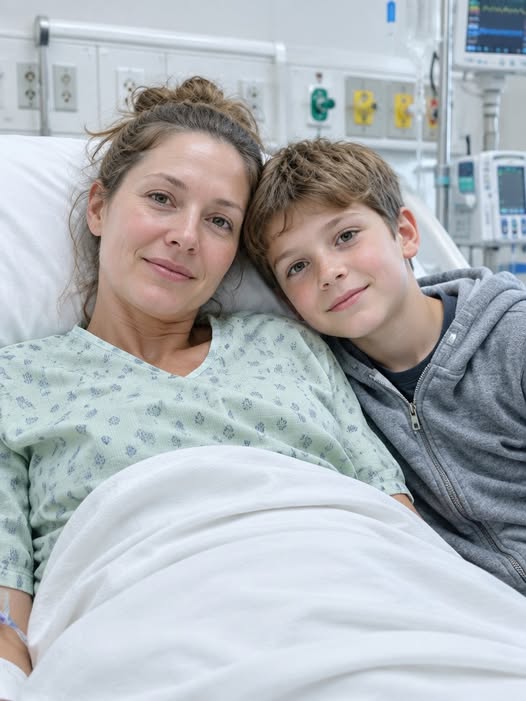
When I finally woke up several hours later, Lucas was sitting beside my hospital bed with red, swollen eyes.
They told me our daughter hadn’t survived.
I screamed until I had nothing left inside me. Lucas held me close and kept saying, “”I’m sorry. I’m so sorry.””
I was weak and heavily medicated, so Lucas took care of everything that followed. I couldn’t even make myself ask many questions. All I wanted was to go home and somehow find a way to survive seeing the empty crib we had built together.
For the next two weeks, I barely stepped outside my bedroom.
Toby became unusually withdrawn too, but I assumed he was dealing with his grief in his own way. Then I noticed a glass jar sitting on his dresser that was slowly filling with money.
Coins. Crumpled dollar bills. Even the fifty dollars Grandma Brenda had given him for his birthday.
One afternoon, I caught him slipping his lunch money into it.
“”What are you saving for, sweetheart?””
He hesitated before answering.
“”My sister.””
My chest tightened.
I pulled him into my arms. “”Toby, I know you miss her, but we can’t bring her back. She’s with God now.””
He pulled away from me and stared straight into my eyes.
“”No, Mom.””
Something about his voice made me uneasy.
“”If I save enough, we can get her back.””
I swallowed hard. “”Honey, that’s not how people work.””
His forehead wrinkled in confusion.
“”Then why did Daddy use money?””
I froze.
“”What?””
Toby looked toward the hallway, almost as though he was worried Lucas might overhear us.
“”The night you were sleeping at the hospital, Grandma Brenda went downstairs to get coffee. I went looking for Dad.””
His voice dropped to a whisper.
“”I saw him talking to a lady near the elevators.””
My heart started pounding.
“”He gave her a thick envelope.””
“”Toby…””
Then he said something that made every hair on my arms stand up.
“”After Daddy gave her the money, she took the bundle away.””
I stared at him.
“”What bundle?””
Tears filled Toby’s eyes.
“”The crying one.””
“”Toby… did you know the woman?””
He nodded.
My heart slammed against my ribs.
“”Who was she?””
His lower lip began to tremble.
“”You know her too, Mommy.””
I stopped breathing.
Then he whispered one more thing:
“”She came to see you in the hospital.””
My fingers went numb.
“”Toby, who was she?””
He opened his mouth.
“”Mommy… it was…””
But his face suddenly crumpled, and he burst into tears before he could finish.
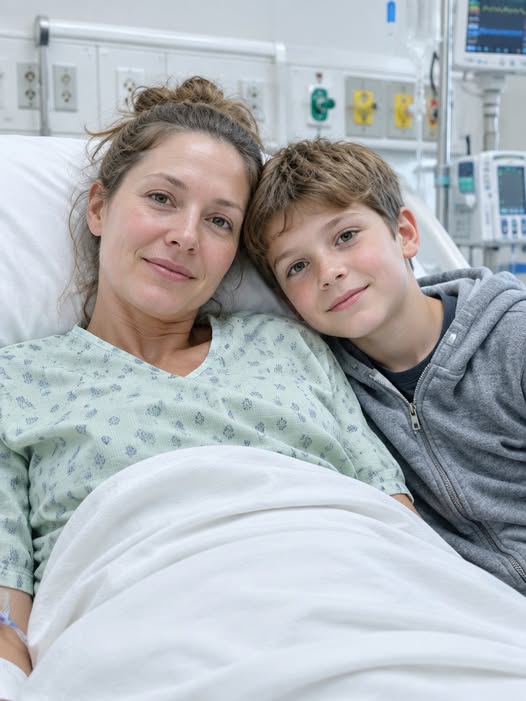
“Mommy… it was Aunt Rachel.”
For several seconds, I could not understand the words even though I had heard every syllable. Rachel was my older sister. She had been at the hospital the morning after the delivery, sitting beside my bed with tears running down her face, holding my hand while telling me she wished she could take some of my pain away. She had brought flowers. She had kissed my forehead. She had cried with me over the daughter I believed I had lost.
I stared at Toby until the room seemed to tilt around us. “Are you absolutely sure?” I asked, trying to keep my voice calm even though my pulse was hammering so violently I could hear it. Toby wiped his eyes with both hands and nodded. “She had the red coat,” he whispered. “The one she wore when she came to your room. Daddy gave her the envelope, and then she took the crying bundle.”
My sister owned one red coat. A long burgundy wool coat with black buttons that she wore almost everywhere during winter. I remembered it clearly because she had been wearing it when she visited me in the hospital. At the time, I had thought she looked strange standing beside my bed in such a bright color while everything in my world felt gray. Now that same coat suddenly seemed like the most terrifying object I could imagine.
I pulled Toby against me and forced myself not to panic in front of him. “Listen to me,” I said quietly. “You did nothing wrong. Nothing. I need you to tell me exactly what you remember, but only what you really saw. Don’t guess for me, okay?” He nodded against my shoulder. His little body trembled. I hated myself for not noticing sooner how much fear he had been carrying alone.
He told me that after Brenda left to get coffee, he wandered away from the family waiting area because he wanted to find Lucas. He had heard a baby crying somewhere down the hallway and thought it might be his sister. Near the elevators, he saw Lucas standing with Rachel. Lucas was holding something wrapped in a white hospital blanket. Rachel had been crying, but not the way people cried at funerals. Toby said she looked frightened.
Then Lucas handed Rachel a thick yellow envelope. Toby assumed it was money because he saw the edges of bills when Rachel opened it slightly. After that, Lucas placed the bundle into her arms. Toby heard the baby cry again. Rachel whispered something to Lucas. Toby could not hear all of it, but he remembered three words clearly because they had frightened him: “She can’t know.” Then the elevator doors opened.
“What did Daddy do after that?” I asked.
“He looked around,” Toby whispered. “So I hid.”
The answer turned my stomach. Children invented monsters beneath beds and ghosts in dark hallways. They did not usually invent specific elevator conversations involving envelopes, familiar coats, whispered warnings, and adults checking whether they were being watched. Still, some desperate part of me searched for another explanation. Maybe Toby had misunderstood. Maybe the bundle belonged to somebody else. Maybe grief had rearranged his memory.
Then he reached beneath his pillow.
“I took this.”
He opened his fist and placed a tiny plastic hospital bracelet in my palm.
My daughter’s name was printed across it.
BABY GIRL CARTER.
My own surname.
My date of birth.
And beneath it, a number matching the identification number I remembered seeing on paperwork before the emergency surgery.
I stopped breathing.
Toby watched my face nervously. “It fell when Aunt Rachel picked her up. I thought Daddy would get mad if he knew I took it.”
I closed my fingers around the bracelet and understood that my life had just divided itself into two separate parts. There was everything I believed before Toby opened his hand. Then there was everything that would exist afterward. My daughter had worn that bracelet. Toby had seen a living baby carried toward an elevator. Lucas had paid my sister. And somebody had told me she was dead.
That night, I pretended nothing had happened.
It was the hardest performance of my life.
Lucas came home shortly after six carrying groceries and a bouquet of white lilies. He kissed my forehead, asked whether I had eaten, and told Toby to finish his homework before dinner. I watched him move through our kitchen with the relaxed confidence of a man who believed his secrets were buried beneath my grief. Every ordinary gesture became unbearable. He opened drawers. He poured water. He smiled at me.
“You seem a little better today,” he said.
“I think I am.”
The lie came out more easily than I expected.
His shoulders visibly relaxed.
That frightened me more than anything.
For two weeks Lucas had watched me barely leave bed. He had seen me cry until I could no longer speak. Yet the first evening I appeared calmer, relief flashed across his face instead of concern. I wondered whether he had been waiting for my questions to stop. I wondered whether he had expected grief to make me passive enough that I would eventually accept every answer he gave me.
After dinner, he suggested we pack away the nursery.
My fork stopped halfway to my mouth.
“Already?”
Lucas avoided my eyes. “Maybe seeing it every day isn’t helping you.”
Across the table, Toby froze.
I forced myself to look down at my plate. “Not yet.”
Lucas sighed. “Claire, we eventually have to move forward.”
Move forward.
Those two words almost made me scream.
Instead, I smiled weakly and said, “I know.”
Later that evening, while Lucas showered, I went into our bedroom and opened the bottom drawer where he kept financial documents. I had never searched my husband’s belongings before. Eleven years of marriage had taught me to respect his privacy. That night, respect felt like a luxury belonging to a different woman, someone whose husband had not possibly handed away their newborn daughter.
The drawer contained insurance papers, tax documents, old receipts, and several bank envelopes. Nothing looked unusual until I found a folded statement from an account I did not recognize.
The balance was $84,300.
The account was only in Lucas’s name.
Three days before my delivery, he had withdrawn $25,000.
My hands began shaking.
I photographed every page with my phone and replaced the statement exactly where I found it. Then I opened our joint banking app. Our shared account looked normal. Lucas’s salary deposits were there. The mortgage payments were there. Nothing suggested he had been hiding tens of thousands of dollars somewhere else.
When Lucas came out of the shower, I was lying in bed.
He smiled when he saw me awake.
“Feeling okay?”
“I’m tired.”
He climbed beside me and put one arm around my waist.
I nearly flinched.
For eleven years, that arm had meant safety. That night, it felt like evidence.
The next morning, I waited until Lucas left for work before calling Rachel.
She answered on the third ring.
“Claire?”
Her voice immediately sounded cautious.
Normally Rachel filled silence before it had a chance to exist. She talked quickly, laughed loudly, interrupted herself constantly, and never answered a phone call without asking three questions at once. But that morning she said my name and waited.
“I found one of your earrings,” I lied. “I think you left it here.”
Another pause.
“At your house?”
“Yes.”
“Oh.”
I closed my eyes.
“When were you here last?” I asked.
Rachel laughed nervously. “I don’t know. Before the hospital, probably.”
“That’s strange. I thought you came by afterward.”
“No. I didn’t want to overwhelm you.”
Another lie.
She had been in my hospital room.
I remembered her red coat hanging from the chair.
I remembered her holding my hand.
I remembered her saying, “I wish I could fix this.”
At the time, those words had sounded loving.
Now they sounded completely different.
“Rachel,” I said, “do you remember visiting me after the surgery?”
Silence.
Then she said, “Claire, you were on a lot of medication.”
My blood went cold.
I had not accused her of anything.
Yet she was already questioning my memory.
“You’re right,” I said quietly. “I probably imagined it.”
Her breath left her in an audible rush.
That was when I knew.
Not everything.
But enough.
I ended the call and sat alone at the kitchen table for nearly twenty minutes before deciding what to do next. My first instinct was to confront Lucas the moment he returned home. My second was to drive straight to Rachel’s house and tear through every room until I found my daughter. But fear stopped me. If Toby was right, two people I trusted had already managed to make a living newborn disappear.
I could not warn them that I knew.
Instead, I called the hospital.
The woman in medical records was polite until I asked for everything connected to my daughter’s birth, including nursing notes, infant records, transfer records, and documentation of her death. Then the conversation changed. She asked why I needed the records. I told her I was her mother and wanted a complete copy. She placed me on hold for nearly nine minutes.
When she returned, her tone was strange.
“We can release your records, Mrs. Carter.”
“And my daughter’s?”
Another pause.
“There may be an administrative issue with the infant file.”
“What kind of issue?”
“I’m not authorized to interpret the record.”
“I’m not asking you to interpret it. I’m asking whether it exists.”
The woman lowered her voice.
“Please submit the request in writing.”
“Was there a death certificate?”
“I really cannot answer additional questions.”
Then she ended the call.
I sat staring at my phone.
When Lucas had told me our daughter died, I had been sedated, weak, and barely conscious. I had never seen a death certificate. I had never seen my baby afterward. Lucas told me the hospital recommended that I avoid seeing her because of everything my body had endured. He said he had handled the paperwork. He said he had arranged everything.
At the time, I believed my husband was protecting me.
Now I wondered what he had been protecting instead.
That afternoon, I called my obstetrician’s office and requested an urgent appointment.
Dr. Elaine Morris had delivered Toby eight years earlier and supervised most of my pregnancy. She had not been present during the emergency surgery because another physician had taken over after complications developed late in labor. When I arrived at her office, she immediately hugged me and told me how sorry she was.
Then I placed the hospital bracelet on her desk.
Her expression changed.
“Where did you get this?”
“My son.”
I told her everything.
Not dramatically.
Not emotionally.
I gave her dates, names, statements, and details.
By the time I finished, Dr. Morris had stopped taking notes.
“Claire,” she said slowly, “there is something I need to tell you.”
I leaned forward.
She hesitated.
“Your daughter was alive when I last received an update.”
The room disappeared around me.
“What?”
“She was alive.”
I gripped the edge of the desk.
Dr. Morris quickly continued. “That doesn’t mean she remained stable. I was not in the operating room, and I don’t want to give you false hope. But after your surgery began, I received a message that the baby had been delivered with a heartbeat and was being evaluated. Later, I was told there had been a catastrophic decline.”
“Who told you?”
She looked at her computer.
“Dr. Nathan Bell.”
I recognized the name.
He was the physician Lucas had repeatedly mentioned after I woke up.
The man who supposedly tried everything to save my daughter.
“Can I speak with him?”
Dr. Morris looked uncomfortable.
“He no longer works at St. Matthew’s.”
“When did he leave?”
She checked.
“Eleven days after your delivery.”
My skin prickled.
“Why?”
“I don’t know.”
“Where did he go?”
“I don’t know that either.”
I took out my phone and showed her the bank statement.
“Lucas withdrew twenty-five thousand dollars three days before I delivered.”
Dr. Morris stared at the photograph.
Then she stood.
“I think you need to contact the police.”
Hearing those words made the nightmare real in a way nothing else had.
I had spent years thinking police belonged in other people’s tragedies. They appeared after robberies, disappearances, violence, terrible things seen on evening television. I had never imagined sitting in a doctor’s office while someone told me I might need them because my husband had lied about the death of our child.
I did not go home first.
I went directly to the police station.
Detective Maria Alvarez listened without interrupting. She was in her late forties, calm-eyed, and so controlled that I initially worried she did not believe me. Then I placed the bracelet on the table. I showed her Lucas’s hidden account. I told her about Rachel. I repeated Toby’s exact words.
When I finished, Alvarez asked one question.
“Where is your son right now?”
“With my mother.”
“Keep him there.”
My stomach tightened.
“Do you think he’s in danger?”
“I think he may be a witness to something important.”
That sentence changed everything again.
I called my mother and told her not to let Toby leave with anyone, including Lucas. I said I would explain later. She heard something in my voice and did not argue.
Detective Alvarez then asked whether Lucas knew I was at the station.
“No.”
“Keep it that way.”
She asked permission to photograph the bracelet and financial statements. Then she made several phone calls while another officer took my formal statement. Nearly two hours later, Alvarez returned with an expression I could not read.
“We found something.”
My heart jumped.
“What?”
“There is no registered death certificate for your daughter.”
For a second, relief hit me so powerfully I nearly fell out of the chair.
Then Alvarez held up one hand.
“Claire, listen carefully. That does not automatically prove your daughter is alive. Records can be delayed or incomplete. But combined with the other information you provided, it is significant.”
“What about the hospital?”
“We’re working on it.”
“And Rachel?”
“We need you not to contact her again.”
I nodded.
“What about Lucas?”
“Go home and behave normally.”
The idea seemed impossible.
“You want me to sleep in the same house with him?”
“For tonight, if you feel safe doing so. If you don’t, we make another plan.”
I thought about Toby.
“I’m not bringing my son back there.”
“That is probably wise.”
So I went home alone.
Lucas arrived thirty minutes later carrying takeout from my favorite Thai restaurant.
He looked around.
“Where’s Toby?”
“Mom wanted him to sleep over.”
Lucas frowned.
“On a school night?”
“She thought I needed rest.”
His eyes stayed on me for slightly too long.
Then he smiled.
“That was nice of her.”
We ate in the living room.
I barely tasted anything.
Halfway through the meal, Lucas reached over and touched my knee.
“I’ve been thinking.”
I waited.
“Maybe we should take a trip.”
“A trip?”
“Just us. Somewhere warm.”
The timing was so strange that I almost laughed.
“When?”
“Soon. Maybe next week.”
“Why next week?”
He shrugged. “We need distance from everything.”
Distance.
I remembered the hidden account.
The money.
Rachel.
The hospital bracelet.
I looked at my husband and wondered whether he was planning to take me away before I discovered what he had done.
“Where would we go?”
“Costa Rica, maybe.”
“Why Costa Rica?”
Lucas smiled.
“You always wanted to go.”
I had mentioned Costa Rica once, six years earlier.
Something about the conversation felt rehearsed.
I smiled back.
“That sounds nice.”
Later that night, Lucas fell asleep quickly.
I did not.
At 1:17 a.m., his phone lit up on the nightstand.
I saw only the beginning of the message.
WE NEED TO MOVE HER.
My entire body went cold.
The sender was saved as “R.”
Rachel.
Lucas shifted beside me.
I closed my eyes immediately.
For several minutes he did not move. Then I heard the mattress creak. The glow of his phone disappeared. He got out of bed and walked quietly into the hallway.
I waited ten seconds before following.
He was in the kitchen whispering.
“No. Claire doesn’t know anything.”
Silence.
“I said no.”
Another pause.
“Then take her tomorrow.”
My hand tightened against the wall.
Lucas lowered his voice even further.
“I don’t care what Brenda thinks anymore.”
My breath caught.
Brenda.
Until that moment, I had assumed Lucas and Rachel were the only people involved.
Lucas continued.
“If she starts asking questions, we leave sooner.”
A floorboard shifted beneath my foot.
Lucas stopped speaking.
I stepped backward quickly and returned to the bedroom.
Less than twenty seconds later, he came in.
I pretended to be asleep.
He stood beside the bed.
I could feel him watching me.
For the first time in eleven years, I was afraid of my husband.
The following morning, Lucas kissed my cheek before leaving for work.
The second his car disappeared, I called Alvarez.
When I told her about the message, she stopped me halfway through.
“What exactly did it say?”
“‘We need to move her.’”
“And he mentioned Brenda?”
“Yes.”
Alvarez was silent.
Then she said, “Do not go anywhere near Rachel’s house.”
“Have you found something?”
“We’re checking an address.”
“What address?”
“I’ll call you.”
“Detective, that’s my daughter.”
Her voice softened.
“I know.”
I drove to my mother’s house and sat with Toby.
He was building a Lego spaceship at the kitchen table. Watching him carefully press tiny pieces together while my entire world unraveled felt almost surreal. After a while, he looked up.
“Did you find her?”
The hope in his face nearly destroyed me.
“Not yet.”
“But you believe me?”
I moved beside him.
“Yes.”
His eyes filled immediately.
“You believe me now?”
The word now hurt.
I pulled him into my arms.
“I should have asked more questions the first time.”
He hugged me tightly.
“I thought maybe I remembered wrong because Dad said she died.”
I leaned back.
“When did Dad tell you that?”
“The hospital.”
My stomach tightened.
“What exactly did he say?”
Toby looked confused.
“He said the baby went to heaven.”
“Before or after you saw Aunt Rachel?”
Toby thought.
“After.”
A chill moved through me.
“How long after?”
“He found me near the elevator.”
My heart seemed to stop.
Lucas knew Toby had been there.
“Did he ask what you saw?”
Toby nodded.
“He asked why I left the waiting room. I told him I heard the baby.”
“And what did he say?”
Toby looked down.
“He said I was confused because I was tired.”
I could barely keep my voice steady.
“Anything else?”
“He told me not to tell you because you were sick.”
There it was.
Lucas had not merely failed to realize Toby witnessed something.
He had silenced him.
I called Alvarez again.
This time, she swore quietly under her breath.
Less than an hour later, two detectives arrived at my mother’s house to interview Toby with a child specialist. I stayed in another room because they did not want me influencing his answers. Every minute felt endless.
When they finished, Alvarez came to me.
“His account is consistent.”
“Meaning?”
“Meaning we’re treating this as a credible abduction investigation.”
My knees nearly buckled.
“Where is my daughter?”
“We believe we know where Rachel has been staying.”
“Believe?”
“She isn’t at her registered apartment.”
“Then where?”
Alvarez looked directly at me.
“A rental property outside the city.”
I stood immediately.
“I’m coming.”
“No.”
“That’s my child.”
“And if she is there, the last thing we need is you arriving before officers secure the property.”
I hated her for saying it.
I also knew she was right.
They made me wait.
Forty-three minutes later, Alvarez’s phone rang.
She answered.
I watched her face.
Her expression changed almost instantly.
Then she looked at me.
“Claire.”
I stood.
My mother grabbed my hand.
Alvarez lowered the phone.
“We found a baby.”
The room blurred.
“Alive?”
“Yes.”
I made a sound I had never heard come out of another human being.
My mother caught me before I fell.
“Is it her?”
“We don’t know yet.”
“What do you mean you don’t know?”
“The baby’s approximate age matches. There are no obvious records explaining why Rachel has custody. We need medical confirmation.”
“Where’s Rachel?”
“In custody.”
“And Lucas?”
“Officers are on their way to locate him.”
I pressed both hands over my mouth.
My daughter might be alive.
My daughter might have spent more than two weeks with the woman who stood beside my hospital bed and watched me mourn her.
Then Alvarez said something unexpected.
“There’s another complication.”
“What?”
“Rachel was not alone.”
Every terrible possibility entered my mind.
“Who was with her?”
Alvarez hesitated.
“Brenda.”
My mother gasped.
Lucas’s mother.
The woman who had been at the hospital.
The woman who supposedly left Toby alone only because she went downstairs to buy coffee.
The woman Lucas had mentioned during his secret phone call.
“What was Brenda doing there?”
“We don’t know yet.”
My shock hardened into fury.
“She knew.”
“Possibly.”
“She knew the entire time.”
“Claire, we need facts before we decide who knew what.”
But facts were arriving faster than my brain could process them.
Rachel had my daughter.
Brenda was with Rachel.
Lucas had paid money.
My baby had no death certificate.
A doctor disappeared from the hospital eleven days after the delivery.
And for sixteen days, I had slept beside a man who apparently knew exactly where our child was.
Police arrested Lucas in the parking garage beneath his office.
I learned later that when officers approached him, he did not ask why they were there.
He asked only one question.
“Did Rachel talk?”
That question would eventually become one of the most important pieces of the entire case.
But I did not know that yet.
At that moment, all I cared about was the hospital where the baby had been taken for examination.
Detective Alvarez drove me there herself.
I kept asking the same question.
“Is she mine?”
Alvarez kept giving the same answer.
“We’re checking.”
When we entered the pediatric wing, I saw two officers outside a private room.
My legs stopped working.
Through the glass panel in the door, I could see a nurse holding a tiny baby wrapped in a pale pink blanket.
She was awake.
Her dark eyes moved slowly around the room.
She had a little patch of soft brown hair.
My hand went to my mouth.
I knew her.
I had never consciously seen her face before.
Yet something inside me knew.
“That’s my baby.”
Alvarez touched my shoulder.
“We need to wait.”
“That’s her.”
I was crying now.
“That’s my daughter.”
A pediatrician came out and explained that the baby appeared healthy. Blood had already been taken for urgent identity testing. There were also hospital records from a private clinic under a different name.
Different name.
The words felt like another theft.
“What did they call her?”
The doctor hesitated.
“Emily.”
“No.”
My voice came out harder than I expected.
“Her name is Sophie.”
That was the name Toby had chosen with us months earlier.
Sophie Elise Carter.
Toby had practiced writing it on drawings for the nursery.
Sophie.
Not Emily.
Never Emily.
The doctor nodded.
“For now, we can call her Sophie.”
The DNA results arrived early the next morning.
99.99 percent probability of maternity.
Sophie was mine.
My daughter had never died.
When the nurse placed her in my arms, I felt every emotion at once: joy, grief, rage, disbelief, love, and a kind of pain so deep it almost felt physical. Sophie opened her eyes and stared at me as though I were simply another face in a world she was still learning.
“Hi,” I whispered.
My voice broke.
“I’m your mommy.”
She moved one tiny hand against my chest.
That was when I finally understood what Lucas and Rachel had taken from me.
Not only sixteen days.
They had taken her first nights.
Her first bath.
The first time she opened her eyes outside a hospital.
The moments I would never get back.
But she was alive.
Nothing mattered more than that.
Toby met her several hours later.
He entered the hospital room carrying the stuffed blue puppy he had chosen months earlier.
For a moment, he stood completely still.
Then he looked at me.
“I told you.”
Three words.
No anger.
No pride.
Just relief.
I started crying again.
“You did.”
He approached the bed cautiously.
“Can she have him now?”
He placed the puppy beside Sophie.
Then he leaned over and whispered, “I saved money, but Mom found you for free.”
Even Detective Alvarez laughed at that.
The happiness lasted less than an hour.
Then Alvarez asked me to step into the hallway.
“We’ve interviewed Rachel.”
My stomach tightened.
“What did she say?”
“She admits taking Sophie.”
I closed my eyes.
“She says Lucas arranged it.”
“That doesn’t surprise me.”
“But she claims Lucas told her you had agreed.”
My eyes opened.
“What?”
“She says Lucas told her the pregnancy had become emotionally unbearable for you and that you planned to give the baby to Rachel after delivery.”
“That’s insane.”
“I know.”
“She watched me cry in the hospital.”
“Yes.”
“She knew I thought Sophie was dead.”
“Yes.”
“Then how can she say she believed I agreed?”
Alvarez did not answer.
She did not need to.
Rachel was lying.
But the next part surprised me.
“She also says the twenty-five thousand dollars wasn’t payment for Sophie.”
“Then what was it?”
“According to Rachel, Lucas owed her money.”
“For what?”
Alvarez looked down at her notes.
“That’s where this gets complicated.”
I suddenly remembered Rachel’s expensive apartment, the vacations she always seemed able to afford despite constantly complaining about money, the designer handbags she said came from outlet stores, the mysterious consulting work she never explained.
“What kind of money?”
“She says she and Lucas have been involved financially for almost three years.”
“Financially?”
Alvarez watched me carefully.
“And personally.”
The hallway went silent.
I understood before she said anything else.
“No.”
“I’m sorry.”
“No.”
“Rachel says she and Lucas have been having an affair.”
I laughed.
Not because anything was funny.
Because sometimes the mind rejects pain by producing the wrong sound.
“My sister?”
“Yes.”
“How long?”
“According to her, twenty-eight months.”
Twenty-eight months.
I mentally counted backward.
Toby’s seventh birthday.
Thanksgiving.
Our anniversary trip.
The summer Rachel stayed with us for a week after telling me she was depressed.
Twenty-eight months.
“How?”
I asked the question as if logistics mattered.
Alvarez shook her head.
“I don’t know.”
I thought of Rachel sitting beside me during pregnancy, rubbing my belly while Sophie kicked. I remembered Lucas teasing her about eating all our food. I remembered family dinners where they barely seemed to speak.
Now I wondered whether their distance had been performance.
“Why would she want my baby?”
“That’s what we’re trying to establish.”
I looked through the window at Sophie.
Then something occurred to me.
“Rachel can’t have children.”
Alvarez’s expression changed slightly.
Rachel had undergone surgery five years earlier after a serious medical complication. She had told everyone that pregnancy was no longer possible for her. She rarely discussed it, and our family treated the subject carefully.
My stomach twisted.
“She wanted Sophie.”
“Possibly.”
“No. She wanted my daughter.”
“We believe that may have been part of the motive.”
Part.
That word frightened me.
“What’s the other part?”
Alvarez hesitated.
“Money.”
I thought about Lucas’s hidden bank account.
“What money?”
“Your life insurance.”
I stared at her.
“My what?”
“Lucas increased a policy on you four months ago.”
My mouth went dry.
“How much?”
“Two million dollars.”
For several seconds, I could not speak.
“I didn’t know I had a two-million-dollar life insurance policy.”
“You signed documents.”
“No, I didn’t.”
“We’re investigating the signature.”
The floor beneath me seemed unstable.
Then Alvarez said something worse.
“Claire, the emergency during your delivery is being reviewed.”
My body went cold.
“Why?”
“We found communication between Lucas and Dr. Bell before you were admitted.”
I gripped the windowsill.
“What kind of communication?”
“Repeated calls.”
“How many?”
“Seventeen in the month before your delivery.”
I whispered, “Why would my husband be calling a doctor I had never met?”
“That’s what we intend to find out.”
Dr. Nathan Bell was located two days later.
He had not moved to another hospital.
He had left the state.
Police found him staying with his brother under circumstances that immediately raised questions. Once investigators showed him the financial records connecting him to Lucas, his attorney contacted prosecutors.
Then the entire story began to collapse.
Lucas had met Bell through a private investment group almost four years earlier. They were not close friends, but Lucas knew Bell had substantial gambling debts and financial problems. Months before Sophie was born, Lucas began giving him money.
Bell eventually admitted helping Lucas manipulate the hospital records.
But he denied causing my medical emergency.
That distinction mattered enormously.
According to Bell, complications during delivery occurred naturally. The bleeding was real. The surgery was necessary. Sophie was delivered alive and initially stable. Lucas then approached Bell with a plan he had apparently been preparing for weeks.
The plan was horrifying in its simplicity.
While I was unconscious and Sophie was being monitored, Lucas wanted records altered to create the appearance that the baby’s condition had suddenly deteriorated. He wanted me told she had died. Rachel would remove Sophie from the hospital during a window when security documentation could be manipulated.
Bell originally refused.
Then Lucas offered him fifty thousand dollars.
Bell accepted.
The thick envelope Toby saw contained the first portion of Rachel’s money, not Bell’s.
Rachel had agreed to take Sophie to a rental house and care for her temporarily while Lucas prepared the next stage of the plan.
But what exactly was that next stage?
That answer came from Brenda.
And it changed everything again.
Brenda asked to speak with me.
At first I refused.
I could not forget that police found her with Rachel and Sophie.
Then Detective Alvarez told me something strange.
“Brenda may have been the reason we found the baby when we did.”
“What?”
“She contacted police anonymously the morning before your report.”
I stared at her.
“What did she say?”
“She said a child might be in danger at the rental property.”
“Then why didn’t you go immediately?”
“She didn’t give enough information to establish what was happening. No child’s name, no clear allegation. She disconnected before dispatch could trace the call properly.”
“Why would she do that?”
“That’s what she wants to explain.”
So I agreed.
Brenda was brought into an interview room where I watched from behind glass.
She looked twenty years older than she had two weeks earlier.
Her hands shook.
“I’m sorry,” she said the moment she saw me through the monitor.
I felt nothing.
Detective Alvarez asked her to begin at the beginning.
Brenda took a breath.
“Lucas came to me five days before Sophie was born.”
She said he told her Claire—me—had become mentally unstable during pregnancy.
I almost laughed.
“He said Claire was saying strange things,” Brenda continued. “He said she didn’t want the baby anymore. He showed me messages.”
“What messages?” Alvarez asked.
“Messages supposedly from Claire.”
My blood chilled.
Lucas had shown Brenda screenshots of text messages in which I supposedly said I regretted the pregnancy and wished Sophie would disappear.
They were fake.
Brenda believed them.
“At first,” she whispered.
That phrase mattered.
“What changed?” Alvarez asked.
“The hospital.”
Brenda described the night Sophie was born.
Lucas told her and Toby the baby had died.
Brenda was devastated.
Then she noticed something she could not explain.
Lucas never asked to see his daughter.
He never asked where Sophie had been taken.
He never collapsed.
Instead, he spent nearly twenty minutes texting.
Later, Brenda went downstairs for coffee.
When she returned, Toby was gone.
She searched the hallways.
She found him near the elevators.
He looked terrified.
Lucas appeared seconds later.
Brenda asked what happened.
Lucas said Toby had become confused.
But Brenda did not believe him.
The next day, Rachel visited me.
Brenda noticed the red coat.
And something else.
Rachel was carrying a diaper bag.
I had never known that.
Brenda followed Rachel when she left my room.
Rachel entered the parking garage and placed the diaper bag into Lucas’s car.
That was when Brenda began watching both of them.
She eventually found the rental property.
Three nights before Toby told me the truth, Brenda drove there.
She saw Rachel through the window.
Holding a baby.
My hands went cold as I listened.
“Why didn’t you tell me immediately?” I whispered at the screen even though she could not hear me.
Alvarez asked the same question.
Brenda began crying.
“Because Lucas threatened Toby.”
My heart stopped.
“What?”
According to Brenda, when she confronted Lucas, he realized she knew too much. He told her that if she went to police before he was ready, Toby would be taken away too.
Not harmed.
Taken.
Lucas told his mother that he had documents prepared claiming I was unstable and incapable of caring for either child. He said he could disappear with Toby before anyone understood what was happening.
Brenda panicked.
She tried to convince Rachel to return Sophie voluntarily.
Rachel refused.
Then Brenda anonymously called police.
By the time officers finally arrived after my report added the missing information, Brenda had gone to the rental house because she believed Rachel planned to move Sophie that morning.
That explained why she was there.
It did not erase everything.
But it changed the shape of her guilt.
Then Brenda revealed the piece that made the entire room go silent.
“Lucas wasn’t planning to keep Sophie.”
Alvarez leaned forward.
“What do you mean?”
Brenda looked directly at the camera.
“He was planning to leave Rachel too.”
My stomach tightened.
Rachel believed Lucas loved her.
She believed they were eventually going to leave together with Sophie and build a new life.
But Lucas had another plan entirely.
Brenda had found documents in his home office.
A passport application.
Financial transfers.
A lease overseas.
Only one adult name appeared on the lease.
Lucas.
No Rachel.
No Sophie.
No Toby.
No me.
Lucas intended to disappear alone.
At first, I could not understand.
Why create an elaborate scheme involving my daughter if he planned to abandon everyone?
Then Detective Alvarez placed another financial document in front of me.
The two-million-dollar policy.
The hidden account.
Several additional transfers.
And a business partnership worth nearly four million dollars that Lucas had quietly sold.
“He was preparing to vanish,” Alvarez explained.
“But why Sophie?”
“Leverage.”
The word made me sick.
Lucas had planned to use Sophie’s supposed death to destabilize me emotionally, strengthen a false narrative that I was mentally unwell, and position himself as the grieving husband managing a broken household.
Rachel was supposed to care for Sophie secretly.
Then, weeks later, Lucas intended to arrange for me to discover his affair.
He expected the combination of grief, betrayal, and exhaustion to push me toward a complete breakdown.
If I became hospitalized or legally deemed unstable, Lucas believed he could gain control of our assets and Toby’s custody while continuing to manipulate Rachel.
Eventually, he planned to leave both women.
Me believing my daughter was dead.
Rachel believing he would return for her.
And Sophie without either parent knowing the truth.
But Lucas had made one enormous mistake.
He underestimated an eight-year-old boy.
Toby remembered.
He saved his money because he thought adults had somehow purchased his sister.
He kept the hospital bracelet.
He watched.
He listened.
And eventually, he told me the truth.
When prosecutors confronted Lucas with the evidence, he denied everything.
He said Bell misunderstood their conversations.
He said Rachel invented the affair.
He said Brenda had always hated him.
He said Toby had an overactive imagination.
He even claimed I had created the entire accusation because grief made me paranoid.
Then investigators recovered Rachel’s old phone.
That was the end.
Thousands of messages.
Photographs.
Voice recordings.
Plans.
Arguments.
Promises.
Lucas telling Rachel he loved her.
Lucas telling her I was “barely functioning.”
Lucas telling her Sophie would eventually be hers.
Lucas complaining that Toby watched everything.
One message arrived four days before my delivery.
Lucas had written:
Once the baby is out, Claire will never know the difference.
Rachel responded:
She’ll ask to see her.
Lucas wrote:
Not if she’s weak enough.
I could not continue reading.
Detective Alvarez closed the file.
“There’s more.”
“I don’t want more.”
“You may need to know one part.”
I looked at her.
She showed me another message.
Rachel had written:
What happens when Toby asks questions?
Lucas replied:
He’s eight. Adults decide what’s true.
That sentence stayed with me longer than almost anything else.
Adults decide what’s true.
Lucas had built his entire plan around that belief.
He believed children were powerless.
He believed grief made women unreliable.
He believed money could make doctors dishonest.
He believed family loyalty could make Brenda silent.
He believed love could make Rachel obedient.
He believed marriage could make me blind.
For a while, he had been right about almost all of us.
Except Toby.
Rachel eventually accepted a plea agreement.
Her cooperation helped prosecutors reconstruct the conspiracy, but she still faced serious charges connected to Sophie’s abduction and fraudulent records.
She wrote me twelve letters.
I opened none of them.
Then one arrived without a return address.
Inside was only a single page.
I almost threw it away.
Instead, I read it.
Claire,
There is no explanation that can make what I did forgivable.
Lucas told me you never wanted another child. He showed me messages that I now know were fake. At first, I believed him because I wanted to. Later, when I realized the truth, I kept going because by then I had Sophie, and I convinced myself that loving her made me less terrible.
It didn’t.
I saw you in the hospital.
I saw your grief.
That was the moment I knew everything Lucas had told me was a lie.
And I still walked away.
I will live with that for the rest of my life.
Rachel.
I folded the letter once.
Then I put it in a box of evidence I kept for Sophie.
Not because I planned to show her someday.
I did not know what I would eventually tell her.
But I had learned something important.
Secrets grow dangerous when one person controls the story.
I wanted the truth preserved.
Even the ugly parts.
Especially the ugly parts.
Lucas refused every plea offer.
His trial began eleven months later.
By then, Sophie had learned to crawl.
Toby had grown three inches.
I had returned to work part-time and moved out of the house where almost every room reminded me of lies.
I changed the locks first.
Then I changed everything else.
Paint.
Furniture.
Curtains.
I left the nursery yellow.
That color belonged to Toby and Sophie.
Not Lucas.
During the trial, his attorneys tried to paint him as a desperate husband trapped between unstable relatives.
It lasted less than two days.
Bell testified.
Rachel testified.
Brenda testified.
Bank records testified in their own silent way.
But the witness who broke Lucas was Toby.
The judge allowed a recorded forensic interview rather than forcing him to face his father directly.
The courtroom watched my eight-year-old son describe the hospital elevator.
The red coat.
The envelope.
The crying bundle.
Then the interviewer asked why he kept Sophie’s bracelet.
Toby’s answer silenced everyone.
“Because grown-ups kept saying she was gone, but I knew something was wrong. I thought maybe if I kept her name, somebody would believe me.”
I covered my mouth.
Across the courtroom, Lucas looked down.
For the first time since his arrest, he could not control his expression.
The jury convicted him on multiple serious charges.
I did not feel triumphant.
There was no victory in watching the father of my children led away.
There was only relief.
Relief that he could no longer rewrite reality for us.
Relief that Toby no longer had to fear him.
Relief that Sophie was home.
After sentencing, Brenda approached me outside the courthouse.
She had respected my distance for months.
“I know I failed you,” she said.
I looked at her.
“You should have told me.”
“I know.”
“You knew she was alive.”
“Not immediately.”
“But when you did know, you still waited.”
Tears appeared in her eyes.
“Yes.”
I wanted to forgive her.
Part of me also wanted to hate her forever.
Both feelings existed at once.
“I don’t know what our relationship looks like now.”
“I understand.”
“But Toby loves you.”
She nodded.
“And Sophie deserves to know her grandmother if you can be someone safe for her.”
Brenda began crying.
“I will spend the rest of my life proving that.”
I did not hug her.
Not that day.
Forgiveness, I learned, was not the same thing as forgetting.
Sometimes forgiveness simply meant allowing someone a chance to behave differently while keeping your eyes open.
Rachel was harder.
For almost two years, I refused contact.
Then one afternoon, a prison counselor called.
Rachel was eligible for a supervised family conversation and had asked whether I would consider speaking with her.
My immediate answer was no.
Then Toby surprised me.
He was ten by then.
“Do you hate Aunt Rachel?”
I looked at him.
“I hate what she did.”
“That’s not what I asked.”
Children have a way of removing the comfortable distance adults build around difficult truths.
“I don’t know.”
He nodded thoughtfully.
“Maybe you don’t have to know yet.”
I smiled.
“Who made you so wise?”
“You.”
I laughed.
“No, definitely not me.”
Eventually, I agreed to speak with Rachel once.
Not for reconciliation.
For answers.
She appeared on the screen thinner than I remembered.
Her hair was shorter.
She cried almost immediately.
I did not.
“Why?” I asked.
That was all.
Rachel closed her eyes.
“Because I wanted your life.”
The answer shocked me more than any excuse would have.
She continued.
“You had everything I thought I was supposed to have. A husband. Children. A home. Every Christmas, every birthday, every family dinner, I watched you and thought life had chosen you instead of me.”
“You were my sister.”
“I know.”
“I loved you.”
“I know.”
“Then why Lucas?”
She looked ashamed.
“Because he noticed the resentment before you did.”
That sentence landed hard.
Lucas had not accidentally fallen into an affair.
He had identified a weakness.
Rachel’s jealousy.
Then he fed it.
He told Rachel I complained about her.
He told her I pitied her.
He told her I thought she was irresponsible and pathetic.
None of it was true.
But because Rachel already carried years of quiet resentment, she believed him.
“He made me feel like I was finally the person being chosen,” she said.
“So you took my child?”
Rachel began crying harder.
“There is no answer that makes sense.”
“No.”
“I know.”
“You held Sophie while I thought she was dead.”
“Yes.”
“You renamed her.”
“Yes.”
“You watched me grieve.”
“Yes.”
I stared at the screen.
“That is the part I can’t understand.”
Rachel wiped her face.
“I can’t understand it either.”
For once, she did not ask me to forgive her.
That helped more than any apology could have.
I ended the call after fourteen minutes.
We did not speak again for another year.
Life slowly became ordinary.
Ordinary became something I treasured.
Breakfast cereal scattered across the table.
Shoes left by the stairs.
Toby complaining about homework.
Sophie learning to say his name.
Her first word was not “Mommy.”
It was “Toby.”
He reminded me of that constantly.
By the time she was three, she followed him everywhere.
He taught her how to stack blocks, how to throw leaves into the air, and how to sneak strawberries from the refrigerator.
Sometimes I watched them together and felt a strange ache.
Sophie would grow up knowing Toby as her older brother.
She would probably never understand that he had once saved her life simply by refusing to accept what adults told him.
Then, three years after Lucas’s conviction, another envelope arrived.
This one came from the district attorney’s office.
Inside was a flash drive.
A note explained that investigators had completed a final review of evidence after an appeal and discovered an audio file they believed I had never heard.
I almost threw it away.
Instead, I listened.
Lucas’s voice filled my kitchen.
Then another voice answered.
Dr. Bell.
The recording had been made accidentally during a phone call shortly before Sophie’s birth.
Lucas said, “Rachel thinks the baby is for her.”
Bell laughed nervously.
“And she isn’t?”
“No.”
My hands froze.
Bell asked, “Then what are you doing?”
Lucas paused.
His next words changed my understanding of the entire crime.
“I need Rachel to take the risk.”
Bell asked, “Risk for what?”
Lucas replied, “Claire will figure it out eventually.”
My heart began pounding.
Bell said, “Then why do it?”
Lucas laughed.
“Because by the time she figures it out, she’ll be looking at Rachel.”
Silence.
Then Bell asked, “And you?”
Lucas answered calmly.
“I’ll be gone.”
I stopped the recording.
For years, everyone assumed Sophie was the center of Lucas’s plan.
She was not.
I was.
Lucas knew I would eventually discover the truth.
He expected it.
He wanted me to.
He had been constructing an escape in which Rachel would appear to be the mastermind.
The hidden payments.
The rental property.
The baby in her custody.
Her red coat.
Her inability to have children.
Even their affair.
All of it created the perfect story.
Jealous sister steals grieving woman’s baby with help from a corrupt doctor.
Lucas intended to disappear while investigators focused on Rachel.
That was why so much evidence pointed directly toward her.
He had not made careless mistakes.
He had planted a trail.
But the plan had failed too early because Toby saw the one moment Lucas could not explain away.
The envelope.
The baby.
The elevator.
And Lucas himself standing there.
I called Detective Alvarez.
She was no longer assigned to the case, but she remembered us immediately.
“I always wondered about that,” she said after listening.
“About what?”
“Why Lucas allowed so many financial connections to Rachel to exist.”
“You thought they were planted?”
“I thought he was too calculating to be that sloppy.”
I looked across the room where Sophie was coloring beside Toby.
“So Rachel was supposed to take the fall.”
“Yes.”
“And Bell?”
“Probably too.”
“And Brenda?”
Alvarez sighed.
“Possibly.”
I suddenly understood something else.
Lucas had told Brenda false stories about my mental health.
If the scheme collapsed, he could claim his mother was the paranoid family member spreading accusations.
Everyone around him had been positioned to become disposable.
Rachel.
Bell.
Brenda.
Me.
Even Toby.
Lucas did not love people.
He arranged them.
The realization finally freed me from a question that had haunted me for years.
How could my husband do this to me?
The answer was that I had spent too long imagining he experienced our marriage the same way I did.
I remembered anniversaries.
He remembered leverage.
I remembered trust.
He remembered access.
I remembered family.
He remembered roles.
That difference had been invisible until it became catastrophic.
When Sophie turned five, she asked why there were no photographs of me holding her as a newborn.
I had always known the question would come.
Still, I was not ready.
We were sitting on the living room floor looking through baby pictures.
Toby was nearby pretending not to listen.
I chose the simplest truth.
“When you were born, something very confusing happened, and we were separated for a little while.”
Sophie frowned.
“Where was I?”
“With someone who should have brought you back sooner.”
“Were you sad?”
“Yes.”
“Did Toby miss me?”
Toby looked over.
“I found you.”
Sophie laughed.
“You didn’t find me.”
“Yes, I did.”
“You were a kid.”
“So?”
She looked at me.
“Did he really?”
I smiled.
“He helped more than anyone.”
Sophie stared at her brother with sudden admiration.
“What did you do?”
Toby shrugged.
“I remembered.”
That answer was perfect.
Because that was what saved us.
He remembered.
Years later, when people asked how I survived what happened, they expected a dramatic answer.
They wanted me to say I became stronger.
That I learned to trust my instincts.
That justice healed everything.
The truth was less polished.
Some mornings I was strong.
Some mornings I was terrified.
For months, I checked Sophie’s crib repeatedly at night even when she was sleeping peacefully.
I sometimes panicked when Toby disappeared around a corner in a crowded store.
I struggled to trust people who had never given me any reason not to.
Healing did not arrive as a beautiful transformation.
It arrived as ordinary days that slowly outnumbered terrible ones.
Lucas appealed his conviction twice.
Both appeals failed.
Rachel eventually completed her sentence and moved to another state.
We exchange one letter every Christmas.
Nothing more.
She has never met Sophie again.
Maybe someday Sophie will choose differently.
That decision will belong to her.
Brenda remained in our lives carefully.
She never demanded forgiveness.
She never defended Lucas.
When Sophie was old enough to ask why her father was absent, Brenda sat beside me and let me choose every word.
That mattered.
So did time.
But the most unexpected change happened with Toby.
For years, I worried the hospital experience had damaged something inside him.
Instead, it seemed to create a quiet determination.
When he was fourteen, his class had an assignment asking students to write about someone who changed their life.
I expected him to choose an athlete.
Maybe a teacher.
Instead, he wrote about Sophie.
The final paragraph made me cry.
He wrote:
My sister taught me that being small doesn’t mean nobody should listen to you. When I was eight, adults told me something was true because they thought I was too young to understand what I saw. I learned that sometimes telling the truth is scary because the people you love might be the people hiding it.
I asked permission to keep the essay.
He pretended to be embarrassed.
Then he gave it to me.
I still have it.
Along with the hospital bracelet.
Along with Rachel’s first letter.
Along with the court documents.
Along with a photograph taken the day Sophie finally came home.
In that photograph, I am sitting on the couch holding her while Toby presses the stuffed blue puppy beside her tiny arm.
I look exhausted.
My eyes are swollen.
Toby is grinning.
Sophie is asleep.
It is not a perfect family photograph.
It is better.
It is true.
For a long time, I believed the worst moment of my life was waking after surgery and hearing Lucas tell me my daughter had died.
I was wrong.
The worst moment came later, when I realized the man comforting me had helped create the grief he was pretending to share.
But the best moment also came later.
It happened in a quiet hospital room when a nurse placed Sophie into my arms and Toby stood beside me holding that blue puppy.
He leaned close to his sister and whispered something.
I almost missed it.
“I knew you weren’t gone.”
Sophie yawned.
Toby smiled.
And for the first time since the night she was born, I believed our family might eventually be okay.
Not unchanged.
Never unchanged.
But ours.
Years afterward, when Sophie was old enough to understand most of the story, she asked Toby the question everyone eventually asked him.
“How did you know?”
We were sitting around the kitchen table.
Toby was seventeen by then, nearly grown, with the same serious eyes he had possessed at eight.
He looked at his sister and thought for several seconds.
Then he said, “Because I heard you cry.”
Sophie smiled.
“That’s it?”
“That’s it.”
“But everybody told you I died.”
“Yeah.”
“And you still believed yourself?”
Toby looked toward me.
Then back at Sophie.
“I didn’t know if I was right,” he said. “I just knew pretending I hadn’t seen it would be worse.”
I will never forget that sentence.
Because sometimes courage is not knowing you are right.
Sometimes courage is refusing to stay silent when you might be.
Lucas had depended on silence.
Rachel had depended on silence.
Bell had depended on silence.
Even Brenda, for a while, had hidden inside silence because fear seemed safer than truth.
Then one frightened eight-year-old boy broke everything open with five words.
Mom, she’s not gone.
Those words destroyed the lie.
They exposed an affair.
They uncovered a hidden fortune.
They revealed a corrupt doctor.
They shattered a carefully planned disappearance.
They brought Sophie home.
And they taught me something I will carry for the rest of my life.
When someone holds power over a family, they often try to control the story before they control anything else.
They decide who is believable.
Who is unstable.
Who is too young.
Who is too emotional.
Who remembers incorrectly.
Who should stop asking questions.
Lucas almost succeeded because I trusted the version of reality he handed me while I was at my weakest.
But truth had one witness he never respected.
A little boy standing near an elevator.
A little boy watching his father hand over an envelope.
A little boy hearing his baby sister cry.
A little boy who quietly picked up a plastic bracelet from the floor and kept it because something inside him refused to let her name disappear.
And that bracelet still sits in a small wooden box in my bedroom today.
Sophie knows where it is.
Toby knows where it is.
Sometimes I take it out and run my thumb across the faded letters.
BABY GIRL CARTER.
The words are nearly unreadable now.
But I do not need them anymore.
Sophie is downstairs when I write this, arguing with Toby about which movie they are going to watch.
She is alive.
She is loud.
She is stubborn.
She hates peas.
She loves astronomy.
She still sleeps with the blue puppy even though one ear has fallen off and the stuffing is coming through the side.
And every year on her birthday, Toby gives her exactly one dollar.
The first year, I asked why.
He shrugged.
“I’m paying myself back.”
“For what?”
“The rescue fund.”
I laughed until I cried.
He had never spent the money in that glass jar.
Not the coins.
Not the crumpled bills.
Not even Grandma Brenda’s fifty dollars.
After Sophie came home, he taped a handwritten label to the jar.
SOPHIE FOUND.
Years later, the jar still sits on his shelf.
And whenever I see it, I remember the afternoon everything changed.
I remember kneeling beside my eight-year-old son while he tried to explain something no child should ever have been forced to understand.
I remember telling him people could not be bought back.
I remember him looking at me with complete confusion.
Then why did Daddy use money?
At the time, that question terrified me.
Now I understand why.
Because Toby had seen the truth before any of us.
Money had changed hands.
People had lied.
A baby had been taken.
But the one thing Lucas never managed to purchase was silence from the child he believed nobody would believe.
And that was the mistake that brought my daughter home.