PART 1
Marcus and I had been married for eleven years. I had spent every one of them sharing him with that hospital.
He was a gifted surgeon, and I was proud that my husband saved so many lives. But over the past year, I had started wrapping up his dinner before I even sat down to eat mine.
He missed Thanksgiving, our anniversary, and our daughter’s eighth birthday.
Sometimes he didn’t come home at all.
“”We’re short-staffed, honey. Please don’t wait up.””
Whenever he finally crawled into bed, he looked so exhausted that I swallowed every complaint. Once, I woke to find him sitting on the edge of the mattress, his shoulders shaking.
“”Marcus?””
He wiped his face before turning around.
“”Rough night. Go back to sleep.””
So that Tuesday, after watching him leave with his hospital badge clipped to his pocket, I decided to surprise him.
I packed his favorite lunch, added a slice of apple pie, and tucked a note under the fork:
You don’t have to take care of everyone. Let me have a turn.
I drove to the hospital, imagining how happy Marcus would be to see me.
But the moment I arrived, something felt wrong.
At the nurses’ station, a woman I had known for years stopped smiling the moment she saw me.
“”Is Marcus around?”” I asked. “”And please don’t warn him. He’ll tell me I shouldn’t have bothered.””
She glanced at the nurse beside her.
My smile faded.
“”Did something happen to him? Where’s Marcus?””
Neither of them answered.
I was starting to get angry at how strangely they were behaving when I spotted Marcus’s colleague, David, approaching me.
His face was as white as a sheet.
He stopped in front of me.
“”I’m so glad you’re here!”” I said brightly. “”Can you tell me where Marcus is?””
David searched my face.
Then, without warning, his eyes filled with tears.
“”He hasn’t told you anything, has he?””
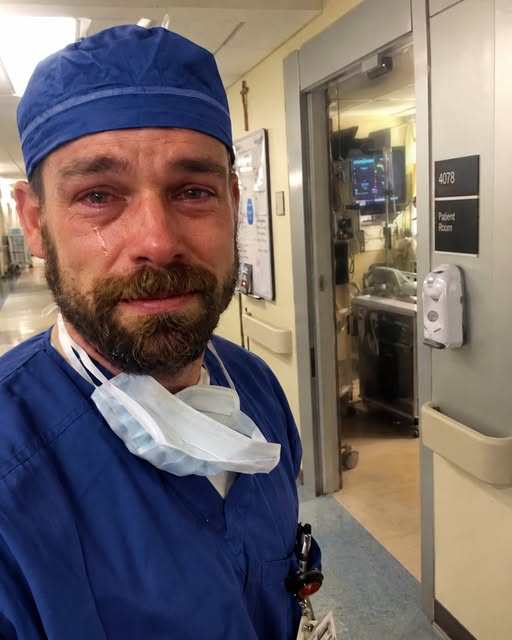
David’s eyes filled with tears.
“He hasn’t told you anything, has he?”
For one strange second, I thought he meant an affair. My mind did something ugly and immediate. It took every late night, every missed dinner, every whispered phone call Marcus ended when I walked into the room, and rearranged them into the worst possible picture. The lunch container suddenly felt heavy in my hands.
“Told me what?”
David looked past me toward the nurses’ station.
The two nurses were staring down at their computers as if the screens had suddenly become fascinating.
I stepped closer.
“David. Where is my husband?”
He rubbed a hand over his mouth.
Then he said something that made the entire hallway tilt beneath my feet.
“Marcus hasn’t performed surgery in almost five months.”
I laughed.
It wasn’t because anything was funny.
It was simply the sound my body made when my brain refused to understand.
“That’s impossible. He operated Sunday night. He came home at four in the morning.”
David closed his eyes.
“No, Natalie.”
The lunch bag slipped slightly in my fingers.
“He was here Sunday.”
“Yes.”
“He was wearing scrubs.”
“Yes.”
“He told me he had an emergency surgery.”
David looked at me with an expression I had never seen on another human being before.
Pity mixed with guilt.
“He wasn’t the surgeon.”
I stared at him.
I could hear phones ringing behind me. Shoes squeaking against polished floors. Someone laughed somewhere near the elevator.
The entire hospital continued functioning while my marriage suddenly stopped making sense.
“Then what was he doing here?”
David swallowed.
“Treatment.”
I couldn’t speak.
The word was simple.
One word.
Treatment.
And yet it seemed to open a hole directly beneath my feet.
“For what?”
David hesitated.
I grabbed his sleeve.
“For what, David?”
“His heart.”
I stared at him.
“He collapsed in an operating room seven months ago.”
My fingers loosened.
The lunch bag fell.
The plastic container inside struck the floor, and I heard the little fork I had packed for him clatter beneath a chair.
Nobody moved to pick it up.
David kept speaking quietly.
“They found a genetic cardiomyopathy. It had already progressed further than anyone expected. He should have stopped operating immediately, but Marcus fought them. He kept insisting he was fine.”
“No.”
“Natalie—”
“No.”
“He collapsed again five months ago. The hospital suspended his surgical privileges.”
“That’s not true.”
“I was there.”
“He would have told me.”
David’s face crumpled.
“That’s what I thought.”
I looked around at everyone watching us.
The nurses.
The receptionist.
A resident standing near the pharmacy window.
People I had smiled at during Christmas parties and charity dinners.
People who had hugged me.
People who had eaten birthday cake in my kitchen.
Every one of them knew something about my husband that I didn’t.
“How many people know?”
David didn’t answer.
I looked at the nurse behind him.
“How many?”
She whispered, “Most of the department.”
Something inside me broke.
Not dramatically.
Not loudly.
It was quieter than that.
It felt like a glass being lowered into freezing water and developing an invisible crack all the way through.
I bent down and picked up the note that had fallen from Marcus’s lunch.
You don’t have to take care of everyone. Let me have a turn.
My hands started shaking.
The irony nearly made me sick.
“Where is he?”
David glanced toward the elevators.
“He’s upstairs.”
“In cardiology?”
“No.”
“Then where?”
He hesitated again.
That hesitation frightened me more than anything he had already said.
“David.”
“He’s in the old conference wing.”
“What is he doing there?”
David’s jaw tightened.
“Meeting with hospital attorneys.”
I stared at him.
“What attorneys?”
“Natalie, maybe Marcus should explain the rest.”
I laughed again, but this time there was anger in it.
“You’ve already told me my husband has a serious heart condition, hasn’t operated in five months, has been lying to me every morning, and apparently spends his days meeting lawyers. I think we’re a little past protecting his right to explain things himself.”
David lowered his voice.
“The lawyers aren’t about his heart.”
I felt cold.
“What are they about?”
His eyes moved toward the floor.
“Your daughter.”
That was the moment fear became terror.
I stopped breathing.
“What happened to Emma?”
“Nothing happened to her.”
“You just said lawyers are discussing my daughter.”
“She’s safe.”
I grabbed his arm harder.
“If something is wrong with my child—”
“She is safe.”
He said it firmly enough that I believed him.
But only barely.
“Then why are lawyers talking about her?”
David looked at me for several long seconds.
“I really think Marcus needs to tell you.”
I turned toward the elevators.
David stepped in front of me.
“Natalie.”
“Move.”
“There are things you’re going to hear that won’t make sense at first.”
“Move.”
“He was trying to protect you.”
That stopped me.
I looked directly at him.
“Do not say that to me.”
David blinked.
“Do not tell me a man who lied to me every morning for seven months was protecting me. I’m tired of women being told that secrets were kept from them for their own good.”
He stepped aside.
I walked toward the elevator.
Then I turned back.
“Which floor?”
“Six.”
The elevator ride lasted twenty-three seconds.
I know because I watched the numbers change above the door and counted every breath.
Two.
Three.
Four.
Five.
Six.
I expected to find Marcus weak.
Maybe in a hospital gown.
Maybe attached to monitors.
Maybe lying in a bed looking like the exhausted man who had crawled beside me so many nights while I told myself his work was killing him.
Instead, when the doors opened, I saw my husband standing at the end of the hallway in a dark suit.
He was speaking to three people beside a conference-room door.
A hospital attorney.
A woman I recognized from administration.
And another man whose name I didn’t know.
Marcus looked thinner than he had a year ago.
His face was pale.
There were dark circles beneath his eyes.
But he was standing.
Talking.
Perfectly capable of coming home and telling me the truth.
He turned.
He saw me.
And every trace of color disappeared from his face.
“Natalie.”
Nobody had warned him.
For once.
I walked toward him carrying the lunch bag.
The three people beside him fell silent.
Marcus took one step forward.
“What are you doing here?”
I almost smiled.
“What am I doing here?”
He looked past me.
He knew immediately.
“David told you.”
“David told me you haven’t operated in five months.”
His eyes closed.
“He told me you have a heart condition.”
“Natalie—”
“He told me you collapsed seven months ago.”
The administrator quietly opened the conference-room door.
“Perhaps we should give you some privacy.”
“No.”
Everyone looked at me.
I pointed at Marcus.
“No more privacy. Apparently privacy is where my husband keeps his entire life.”
Marcus whispered my name.
I held up the lunch bag.
“I brought you apple pie.”
His face changed.
That almost destroyed me.
Of all the things I said, the apple pie was what made his eyes fill.
I pulled out the note.
“I wrote this because I thought you were exhausted from saving strangers.”
Marcus looked down.
I unfolded the paper.
“You don’t have to take care of everyone. Let me have a turn.”
His mouth trembled.
“I’m sorry.”
“How sick are you?”
The hallway went completely silent.
Marcus glanced toward the others.
I stepped closer.
“Look at me.”
He did.
“How sick?”
His voice came out quietly.
“They don’t know.”
“That isn’t an answer.”
“My heart function has been getting worse.”
“Are you dying?”
The administrator looked away.
Marcus didn’t.
“That’s possible.”
Something struck the center of my chest.
I had imagined being angry.
Instead, all I could see was eleven years.
Marcus teaching Emma to ride a bicycle.
Marcus asleep on our sofa with a medical journal open across his chest.
Marcus dancing badly in our kitchen.
Marcus holding my hand during labor.
Marcus kissing my forehead every morning before leaving for the hospital.
My husband might be dying.
And he hadn’t trusted me enough to tell me.
I slapped him.
The sound echoed down the hallway.
Nobody moved.
Marcus didn’t raise a hand to his face.
He simply looked at me.
Tears slid down my cheeks.
“You were going to leave me alone without even giving me time to be afraid with you?”
“I couldn’t do that to you.”
“You already did.”
“I wanted you and Emma to keep living normally.”
“Normally?”
My voice broke.
“You missed her birthday.”
His eyes closed.
“She waited by the window until midnight because you promised you would come home.”
“I know.”
“You missed our anniversary.”
“I know.”
“You told me you were operating on Thanksgiving.”
“I know.”
“You let me feel guilty for being angry with you.”
“I know.”
Every answer made me angrier.
“You let me think I was selfish.”
“I know.”
I shoved the lunch bag against his chest.
He caught it automatically.
“Congratulations. You protected me.”
Then I turned toward the elevator.
“Natalie.”
I kept walking.
“Natalie, wait.”
“No.”
“There’s more.”
I stopped.
Of course there was.
I slowly turned around.
Marcus stood in the middle of the hallway holding the lunch I had packed for him.
“There’s more?”
He looked toward the conference room.
The attorney shifted uncomfortably.
Marcus’s silence told me everything I needed to know.
Whatever waited behind that conference-room door was worse than the heart condition.
I walked back.
“Open the door.”
“Natalie.”
“Open it.”
Marcus whispered, “Please.”
I stepped close enough that nobody else could hear me.
“If you lie to me one more time, whatever is left of our marriage will end in this hallway.”
He stared into my eyes.
Then he opened the conference-room door.
There were files spread across the table.
Old files.
Some pages were yellowed.
Others looked freshly printed.
A laptop sat open beside three cardboard archive boxes.
On the screen was a photograph.
It was me.
Eight years younger.
Pregnant.
Smiling beside Marcus.
I recognized the picture immediately.
It had been taken outside the fertility clinic after our first successful ultrasound.
My stomach tightened.
“Why is that here?”
Nobody answered.
I stepped closer to the table.
There was another photograph beneath it.
David.
Standing beside a blond woman I vaguely remembered meeting years ago.
His first wife.
Rachel.
She had died in a car accident when Emma was three.
I looked at Marcus.
“What does David have to do with this?”
His shoulders dropped.
“Everything.”
I glanced at the attorney.
Then the administrator.
Then back at Marcus.
“You have thirty seconds before I walk out and hire my own lawyer.”
Marcus pulled out a chair.
I remained standing.
He didn’t argue.
“Nine years ago,” he began, “when we were doing IVF, the clinic performed genetic screening on our embryos.”
“I know.”
“There was additional screening you didn’t know about.”
My pulse quickened.
“What additional screening?”
Marcus looked down at his hands.
“My family had a history of unexplained sudden cardiac deaths.”
I remembered.
His uncle had died at forty-two.
A cousin had died while running a marathon.
Marcus had always said they were unrelated tragedies.
“They weren’t unrelated,” he said.
I stared at him.
“You knew?”
“Not completely.”
“When?”
“Before our embryo transfer.”
I felt something inside me go very still.
Marcus continued.
“I had genetic testing done privately. The mutation I carry can be inherited.”
I immediately thought of Emma.
“Does she have it?”
“No.”
The answer came quickly.
Too quickly.
Marcus’s eyes filled again.
“She doesn’t.”
Relief washed through me so violently that I nearly collapsed.
Then I noticed nobody else in the room looked relieved.
Marcus was staring at the table.
The attorney was staring at Marcus.
The administrator looked as though she wanted to disappear.
I whispered, “Why doesn’t she have it?”
Marcus said nothing.
My heart began pounding.
“Marcus.”
He looked at me.
“Emma isn’t biologically mine.”
The room disappeared.
There are sentences so impossible that the human mind refuses to process them.
That was one.
I stared at my husband.
Then I laughed.
“That’s ridiculous.”
Marcus didn’t move.
“You’re sick. You’re confused.”
“I’m not.”
“She’s your daughter.”
“She is my daughter.”
“You just said—”
“Biologically.”
I stood so fast the chair behind me tipped over.
“I never cheated on you.”
“I know.”
The words exploded out of me.
“I never cheated.”
“I know.”
“Then don’t you dare stand there and tell me—”
“Natalie.”
“I carried her.”
“I know.”
“We made those embryos together.”
Marcus covered his face.
And that was when I understood that he wasn’t accusing me.
He was confessing something.
My anger vanished.
Fear replaced it.
“What did you do?”
Marcus lowered his hands.
The attorney quietly said, “Dr. Hale, I strongly recommend—”
“Leave.”
Marcus looked at him.
“Excuse me?”
“My wife asked me a question. Leave.”
The attorney hesitated.
Marcus pointed toward the door.
“All of you.”
The administrator gathered her papers.
The unknown man followed.
The attorney stayed.
“This is exactly why we advised against private disclosure.”
Marcus laughed bitterly.
“You mean because my wife might finally learn what happened?”
The attorney’s face tightened.
“Natalie deserves the truth.”
I whispered, “Then tell me.”
The attorney walked out.
Marcus closed the door.
For several seconds, neither of us spoke.
Then Marcus reached into one of the archive boxes.
He removed an old laboratory sheet.
There were two patient identification numbers.
Two dates.
And several lines marked with handwritten initials.
“I need you to understand who I was then.”
“I don’t care who you were.”
“Natalie—”
“I want to know what you did.”
He nodded.
“When the genetic results came back, every viable embryo we had carried my mutation.”
I stared at him.
“We had four.”
“Two stopped developing.”
“And the other two?”
“Positive.”
My mouth went dry.
“Why didn’t you tell me?”
“I panicked.”
“You could have told me.”
“I know.”
“We could have tried again.”
“I know.”
“We could have used donor sperm.”
“I know.”
“We could have adopted.”
“I know.”
My voice rose.
“We could have made that decision together.”
“I know.”
I hated those two words.
Marcus looked toward the photograph of pregnant me.
“You had already been through three years of infertility. Two miscarriages. Surgery. Injections. You blamed yourself for all of it.”
“That didn’t give you the right—”
“I know.”
“What did you do?”
He swallowed.
“There was another couple scheduled for embryo transfer that week.”
I looked at Rachel’s photograph.
My stomach turned.
“David.”
Marcus nodded.
“David and Rachel had several healthy embryos.”
I stopped breathing.
“No.”
Marcus looked at me.
“No.”
“Natalie—”
“No.”
“They had signed consent forms allowing unused embryos to be donated anonymously.”
I backed away from him.
“No.”
“I convinced myself it was almost the same thing.”
“Almost?”
My voice sounded unfamiliar.
“You convinced yourself stealing another couple’s embryo was almost the same as anonymous donation?”
Marcus flinched.
“I didn’t steal it.”
“Then what do you call it?”
“I told the embryologist that David had agreed.”
“Had he?”
Marcus said nothing.
I answered for him.
“No.”
“I falsified the authorization.”
The sentence landed softly.
That somehow made it worse.
I stared at the man I had slept beside for eleven years.
The man I had trusted with every medical decision.
The man who lectured residents about consent.
The man who had once told Emma that doctors never get to make choices for patients simply because they think they know better.
“You switched the embryos.”
“Yes.”
I shook my head.
“No.”
“Natalie.”
“Emma?”
He nodded.
“Our daughter is biologically David and Rachel’s.”
I walked away from him.
There was nowhere to go.
I reached the wall.
Pressed both palms against it.
Tried to breathe.
Behind me, Marcus began crying.
I couldn’t turn around.
My beautiful little girl.
Emma with Marcus’s stubbornness.
Emma with my habit of singing while she brushed her teeth.
Emma who had his patience and my temper.
Except apparently none of those things came from blood.
Memories began attacking me.
The first ultrasound.
The first kick.
Her tiny fingers wrapping around mine.
Marcus crying when she was born.
“Did you know when she was born?”
“Yes.”
I turned.
That answer broke something deeper than everything else.
“You stood beside my hospital bed holding her, and you knew?”
“Yes.”
“You watched me tell everyone she had your eyes.”
“I know.”
“You watched your mother say she had your grandfather’s chin.”
Marcus cried harder.
“I know.”
I grabbed the nearest file and threw it.
Papers scattered across the room.
“You knew!”
“I was terrified.”
“For eight years?”
“Every day.”
“You weren’t terrified enough to tell me!”
“I thought if I told you, I would lose both of you.”
“You should have thought about that before you stole someone else’s child.”
Marcus’s face collapsed.
The words hung between us.
Someone else’s child.
David’s child.
Rachel’s child.
I suddenly remembered David’s face downstairs.
The tears.
The way he had looked at me.
“He knows.”
Marcus said nothing.
I stepped toward him.
“David knows.”
“Yes.”
“How long?”
“Three months.”
I almost couldn’t believe there were still new ways for the truth to hurt me.
“How?”
Marcus sat down slowly.
“After my diagnosis, I needed genetic counseling. The cardiologist strongly recommended testing Emma because of the inheritance risk.”
“You tested our daughter without telling me?”
“I used a cheek swab.”
“You tested her behind my back?”
“Yes.”
He said it quietly.
Like confession had become the only language left between us.
“The lab showed she didn’t carry the mutation. But there were other inconsistencies.”
“What inconsistencies?”
“The geneticist said her markers didn’t support a biological father-daughter relationship.”
I sat down.
My legs suddenly couldn’t hold me.
“So you investigated.”
“Yes.”
“And discovered what you already knew.”
“At first I thought the old records were gone.”
“But they weren’t.”
“No.”
Marcus looked at Rachel’s photograph.
“David had copies.”
I stared at him.
“Why?”
“He had spent years trying to understand why Rachel’s final IVF cycle failed.”
“What do you mean?”
Marcus’s expression changed.
There was another secret.
Of course there was.
“Rachel became pregnant during the same week you did.”
I frowned.
“But you said—”
“With another embryo.”
I felt sick.
“What happened?”
“She miscarried at fourteen weeks.”
I covered my mouth.
Marcus continued quietly.
“David always believed something had gone wrong in the lab. The clinic told him it was spontaneous. But Rachel had written down the embryo identification number from the transfer sheet.”
I looked at the papers scattered on the floor.
“When David compared that number with archived records three months ago, he found alterations.”
“And then?”
“He confronted me.”
I could picture it.
David standing where I was standing now.
Learning that the little girl he had watched at department picnics and birthday parties was biologically his.
Learning that Marcus had known for eight years.
“What did he do?”
“He hit me.”
“Good.”
Marcus didn’t react.
“What else?”
“He wanted to tell you immediately.”
“But you stopped him.”
“I begged him for time.”
“Why?”
“Because Emma is eight.”
I stood.
“Don’t use her.”
“I’m not.”
“You’ve used her existence to justify every lie you’ve told.”
“I was trying to figure out how to tell you without destroying her life.”
“You destroyed that possibility nine years ago.”
Marcus stood too.
“I know.”
I laughed bitterly.
“There it is again.”
He wiped his face.
“I don’t know what else to say.”
“How about why David kept quiet?”
Marcus looked toward the door.
“He didn’t.”
I frowned.
“What does that mean?”
“He reported me.”
My eyes moved toward the conference-room table.
The attorneys.
The hospital administrator.
The archive boxes.
“This meeting.”
Marcus nodded.
“The hospital opened an internal investigation six weeks ago.”
“Into you?”
“And the fertility center.”
My mind began racing.
“You said an embryologist helped you.”
Marcus’s face tightened.
“Her name was Patricia Cole.”
“Where is she?”
“She retired five years ago.”
“Does she admit it?”
“She says she doesn’t remember.”
“Convenient.”
Marcus gave a hollow laugh.
“Yes.”
I looked toward the door.
“Is that why everyone downstairs acted like someone died when I walked in?”
“Some know about my health. A few know about the investigation. Nobody was supposed to discuss either with you.”
I stared at him.
“Nobody was supposed to discuss the fact that I carried another woman’s embryo without knowing it?”
“The hospital was terrified of exposure.”
“And you?”
Marcus looked at me.
“I was terrified of you.”
For the first time, I believed him completely.
I picked up my purse.
“Where are you going?”
“Home.”
“Natalie.”
“I need to see my daughter.”
“Our daughter.”
I turned so quickly that Marcus stepped backward.
“Do not correct me.”
His face went pale.
I lowered my voice.
“She is my daughter because I carried her, gave birth to her, fed her, stayed awake through every fever, held her hand on the first day of kindergarten, and learned exactly how much cinnamon she likes on oatmeal.”
Marcus nodded.
“But you do not get to stand there and suddenly become sentimental about words after treating her existence like a secret transaction.”
He looked down.
I walked toward the door.
“Natalie.”
I stopped but didn’t turn.
“I love you.”
I closed my eyes.
Eleven years earlier, those words had made me say yes to a marriage proposal.
Eight years earlier, they had made me believe we could survive anything.
Now they sounded almost insulting.
“I don’t know who you are.”
Then I left.
David was waiting beside the elevator.
I wanted to hate him.
It would have been easier.
Instead, when I saw his face, I saw pieces of Emma.
Not obvious pieces.
Nothing dramatic.
But suddenly I noticed the slight indentation in his chin.
Emma had that.
The way his eyebrows lifted unevenly when he was worried.
Emma did that too.
I hated myself for noticing.
“Did he tell you?”
I pressed the elevator button.
“Yes.”
David exhaled.
I watched him.
“Is she yours?”
His face broke.
He nodded once.
I looked away.
The elevator arrived.
David didn’t follow me inside.
Before the doors closed, he said, “Natalie.”
I looked at him.
“I’m not trying to take Emma from you.”
The doors began closing.
I put my hand between them.
They reopened.
“You don’t get to make promises to me yet.”
He nodded.
“I understand.”
“No, you don’t.”
“I probably don’t.”
“Did Rachel know?”
His eyes filled.
“No.”
That hurt in a different way.
For a moment, neither of us spoke.
Then I asked the question I was afraid to ask.
“If she had known?”
David looked toward the floor.
“She would have wanted to meet her.”
I stepped back into the elevator.
The doors closed.
I drove home without remembering a single traffic light.
Emma’s backpack was lying near the front door.
Her shoes were kicked beneath the bench even though I had asked her approximately four thousand times to put them in the basket.
Ordinary things.
Beautiful things.
I stood in the hallway staring at those shoes until I started crying.
“Mom?”
Emma appeared at the top of the stairs.
She was wearing purple leggings and one of Marcus’s old college T-shirts as pajamas.
Her hair was wet.
She smiled.
“You’re home early.”
I wiped my face too late.
Her smile disappeared.
“What happened?”
“Nothing.”
She came downstairs.
“Did Dad get hurt?”
Children are terrifying sometimes.
They see the thing adults work hardest to hide.
I held out my arms.
Emma walked into them immediately.
I hugged her so tightly she laughed.
“Mom, I can’t breathe.”
“Sorry.”
I loosened my arms.
She looked up at me.
“Did somebody die?”
“No.”
“Are you and Dad getting divorced?”
My heart stopped.
“Why would you ask that?”
She shrugged.
“You’ve been mad at him a lot.”
I sat on the bottom stair.
Emma sat beside me.
“Dad has been busy.”
“He’s always busy.”
There was no anger in her voice.
That was worse.
She had accepted his absence.
I brushed damp hair away from her forehead.
“You know your dad loves you, right?”
Emma gave me a strange look.
“Obviously.”
I almost laughed.
Then she leaned against me.
“He missed my birthday because somebody needed surgery.”
I closed my eyes.
The lie had reached her too.
I kissed the top of her head.
“Emma.”
“Yeah?”
“If grown-ups make mistakes, even really big mistakes, none of that changes how much you are loved.”
She frowned.
“What did I do?”
“Nothing.”
“Then why are you giving me the speech you give me when I break something?”
That made me laugh through my tears.
“Because your mother is weird.”
“That’s true.”
I pulled her closer.
For that moment, I decided she would know nothing.
Not until I understood enough to protect her from the adults who had turned her identity into evidence.
Marcus came home at ten.
Emma was asleep.
I was sitting at the kitchen table.
In front of me were three things.
My wedding ring.
A notebook.
And the little note I had packed with his lunch.
Marcus stopped in the doorway.
“I didn’t know if you’d let me come home.”
“This is still your house.”
He looked at the ring.
“For tonight.”
He sat across from me.
Neither of us spoke for several seconds.
Finally, I opened the notebook.
“I have questions.”
Marcus nodded.
“I’ll answer everything.”
“The truth?”
“Yes.”
“Even if it ends us?”
His face tightened.
“Yes.”
I wrote down his answer.
He watched me.
“When did you first know about the heart mutation?”
“Nine years ago.”
“Before our transfer?”
“Yes.”
“Did you tell any member of your family?”
“My mother.”
I stopped writing.
“What?”
Marcus looked away.
My mother-in-law, Evelyn, had been chief of medicine at the hospital before retiring.
She had introduced me to the fertility specialist.
She had sat beside me after my first failed cycle.
She had cried when Emma was born.
“She knew?”
Marcus whispered, “Yes.”
“How much?”
“Everything.”
I stared at him.
“Your mother knew Emma wasn’t biologically yours?”
“Yes.”
The betrayal expanded so suddenly I almost felt dizzy.
“And she let me call her from the delivery room.”
“Yes.”
“She stood beside my bed and told me Emma had your grandfather’s chin.”
Marcus looked sick.
“She was trying to make everything feel normal.”
I laughed.
“Normal?”
My hand shook so badly I had to set down the pen.
“How many people made decisions about my body without me?”
“Two.”
“You and your mother?”
“And Patricia.”
“Three.”
Marcus closed his eyes.
“Three.”
I stared at him.
“Why did Evelyn help?”
“She was terrified of the mutation.”
“So she helped steal an embryo?”
“She arranged access to the lab after hours.”
My skin crawled.
Marcus saw my expression.
“I’m not blaming her.”
“You shouldn’t. You were a grown man.”
“I know.”
“Did David know then?”
“No.”
“Did anyone tell Rachel?”
“No.”
I looked down at my notebook.
There was one question I had avoided.
“What happened to our embryos?”
Marcus went completely still.
I knew immediately that the answer was worse than I expected.
“Marcus.”
He swallowed.
“What happened to the two embryos that were ours?”
“One was discarded.”
I stared at him.
“And the other?”
Marcus didn’t answer.
My pulse accelerated.
“The other?”
He rubbed both hands over his face.
“My mother convinced Patricia not to destroy it.”
“Why?”
“She believed medicine might change.”
“Where is it?”
Marcus said nothing.
I stood.
“Where is my embryo?”
“Natalie.”
“Where?”
“It was stored.”
“For how long?”
“Three years.”
“And then?”
Marcus looked at me.
“It was transferred.”
The room became silent.
“To who?”
His lips parted.
No sound came out.
I leaned across the table.
“To who, Marcus?”
He whispered one word.
“Rachel.”
I couldn’t move.
“What?”
“Rachel wanted another IVF attempt two years after Emma was born.”
I stared at him.
“No.”
“She and David had no remaining embryos.”
“No.”
“My mother—”
“No.”
“Evelyn believed it could solve what we had done.”
I backed away.
“How?”
“She thought if Rachel carried our biological embryo, then somehow the families would be… balanced.”
I laughed because the idea was so monstrous it sounded absurd.
“Balanced?”
Marcus’s eyes filled.
“She convinced Patricia to list the embryo as an anonymous donation.”
I covered my mouth.
“Did Rachel become pregnant?”
Marcus looked down.
My entire body turned cold.
“Marcus.”
“Yes.”
I could hear my own heartbeat.
“What happened?”
“She carried to term.”
I grabbed the back of a chair.
“You told me Rachel miscarried.”
“The first pregnancy.”
“But the second?”
Marcus whispered, “She had a daughter.”
I stared at him.
“What daughter?”
“Her name was Sophie.”
I knew that name.
Everyone in Marcus’s department knew that name.
Sophie Hale.
No.
Sophie Mercer.
David and Rachel’s little girl.
She had died before her second birthday after complications from a rare neurological condition.
I had attended her funeral.
I had stood beside Marcus while David buried her.
I remembered the tiny white flowers.
I remembered Rachel’s scream.
I remembered thinking no parent should ever have to survive that sound.
My knees gave out.
Marcus rushed toward me.
I shoved him away.
“No.”
“Natalie—”
“No.”
I crawled backward until I hit the cabinet.
“Sophie was mine?”
Marcus cried.
“Biologically.”
I made a sound I didn’t recognize.
Our daughter.
The biological child Marcus and I had created.
The child I had never been told existed.
Had lived twenty minutes away from me.
I had met her.
Once.
At a hospital picnic.
She had been asleep in Rachel’s arms, wrapped in a yellow blanket.
I remembered touching her tiny foot.
“Oh my God.”
Marcus dropped to his knees.
“I’m sorry.”
I screamed.
Not words.
Just sound.
Years of stolen truth came out of me at once.
Marcus reached toward me.
I slapped his hands away.
“You let me attend my own daughter’s funeral.”
He sobbed.
“I didn’t know she was ours until after she died.”
I froze.
“What?”
“My mother told me.”
“When?”
“After the funeral.”
I stared at him.
“And you still didn’t tell me.”
“I thought it would destroy you.”
“You don’t get to decide what destroys me!”
Emma appeared in the doorway.
“Mom?”
Everything stopped.
She stood barefoot in the hallway.
Terrified.
I wiped my face.
Marcus turned away quickly.
Emma looked between us.
“What happened?”
“Nothing, sweetheart.”
“That doesn’t look like nothing.”
I stood.
She backed away slightly.
I forced my voice to become gentle.
“Your dad and I are arguing.”
“About me?”
Marcus looked at me.
I answered immediately.
“No.”
That was the first lie I told my daughter that night.
It would not be the last.
Emma looked at Marcus.
“Are you leaving?”
He stood slowly.
“I’m going to stay somewhere else tonight.”
“Why?”
“Because your mom needs some space.”
She looked at me.
“Did Dad cheat?”
Marcus almost laughed through his tears.
“No.”
Emma crossed her arms.
“Then what did he do?”
I walked toward her.
“It’s complicated.”
“I’m eight, not stupid.”
“No one said you were.”
She looked at Marcus again.
Then she did something that broke his heart right in front of me.
She walked past him and hugged me.
Marcus stood absolutely still.
“I’ll call you tomorrow,” he whispered.
Emma didn’t answer.
He picked up his keys.
At the door, he looked back.
I saw everything in his face.
His illness.
His fear.
His regret.
His love.
And none of it was enough to erase what he had done.
After he left, Emma climbed into my bed.
She fell asleep with one hand wrapped around my wrist.
I stayed awake until dawn.
At six in the morning, someone knocked on the front door.
It was David.
He looked terrible.
I stepped outside and closed the door behind me.
“If you came to see Emma—”
“I didn’t.”
He held out an envelope.
“What is that?”
“Something Marcus doesn’t know I found.”
I didn’t take it.
David continued.
“When Rachel died, I packed everything from our home into storage. After Marcus confessed, I went through her old IVF records.”
My stomach tightened.
“She kept journals.”
I took the envelope.
“What’s inside?”
“A photocopy.”
“Of what?”
David looked at me.
“A letter from Evelyn.”
I opened it.
The handwriting was unmistakable.
I had received birthday cards in that handwriting for eleven years.
Rachel,
You may never understand why the clinic made certain decisions, but I need you to believe your daughter came to you for a reason. Sometimes biology creates responsibilities that paperwork cannot explain.
Please do not question Patricia again.
For everyone’s sake, let this remain a blessing.
Evelyn Hale.
The letter was dated six months after Sophie’s birth.
I looked at David.
“Rachel knew something.”
“She suspected.”
“Did she tell you?”
“No.”
“Why not?”
David’s eyes filled.
“She was afraid.”
“Of Evelyn?”
“I think so.”
I folded the paper.
“There’s something else.”
Of course there was.
David handed me a second page.
It was a copy of Rachel’s journal.
Three sentences were underlined.
I saw Evelyn at the hospital again today.
She asked whether Sophie has been having unusual movements.
How would she know?
I looked up.
“What does that mean?”
David’s face had gone pale.
“I don’t know.”
But he did.
I could see it.
“Tell me.”
He took a breath.
“Before Sophie became sick, Evelyn was already asking questions about symptoms.”
I stared at him.
“Why?”
“That’s what I want to know.”
The front door opened behind me.
Emma stepped outside.
She was wearing pajamas and holding her stuffed rabbit.
She looked at David.
David looked at her.
For the first time, they were standing face-to-face knowing what I knew.
David’s eyes immediately filled.
Emma glanced at me.
“Who is this?”
“You’ve met him before.”
David quickly wiped his face.
“I work with your dad.”
Emma studied him.
Then she said something that made every hair on my arms rise.
“You look like me.”
Nobody spoke.
Emma frowned.
She touched her chin.
“You have my weird dent.”
David looked like someone had punched him.
I put my hand on Emma’s shoulder.
“Go inside, sweetheart.”
She looked suspiciously between us.
“Why is everyone acting weird?”
“We’ll talk later.”
“You always say that when you don’t want to answer.”
“Emma.”
She sighed dramatically and went inside.
The door closed.
David stared at it.
“I’m sorry.”
“For what?”
“For looking at her like that.”
I folded my arms.
“You’re allowed to look.”
He shook his head.
“No. Not until you decide what happens.”
That surprised me.
“She’s biologically yours.”
“She’s your daughter.”
“Both can be true.”
David looked toward the house.
“I’ve spent three months reminding myself of that.”
My anger softened slightly.
Then I remembered Rachel’s letter.
“What aren’t you telling me?”
David’s jaw tightened.
“There are medical records from Sophie’s first year.”
“And?”
“Her neurologist suspected a genetic disorder.”
I felt cold.
“What kind?”
“I don’t know exactly. Rachel handled most of it because I was working constantly.”
He looked ashamed.
“They ordered genetic testing shortly before Sophie died.”
“Results?”
“Missing.”
“Missing?”
“The hospital says they were never completed.”
“You don’t believe them.”
“No.”
“Why?”
David looked at Evelyn’s letter.
“Because Rachel wrote that Evelyn already knew what the test would show.”
My mouth went dry.
I called Marcus.
He answered immediately.
“Natalie?”
“Did Sophie have your heart mutation?”
Silence.
That was enough.
“Marcus.”
“No.”
“What did she have?”
“Natalie, where are you?”
“What did our biological daughter have?”
David looked at me.
Marcus exhaled shakily.
“The mutation wasn’t the only thing found during our embryo screening.”
I closed my eyes.
“What else?”
“There was another genetic abnormality.”
David’s face changed.
He heard enough through the phone.
“What abnormality?”
Marcus whispered, “It was associated with the neurological condition Sophie developed.”
I felt the porch move beneath me.
“You knew.”
“I knew the embryo carried it.”
“And your mother transferred it anyway.”
Marcus started crying.
“Yes.”
I stared at David.
He understood.
Rachel hadn’t simply received an anonymous embryo.
She had been given an embryo known to carry a serious genetic abnormality.
Without informed consent.
David took the phone from my hand.
“You knew?”
Marcus said his name.
“You knew the embryo was affected?”
“Yes.”
David’s face became terrifyingly calm.
“My daughter spent eighteen months in hospitals.”
“I know.”
“She had seizures.”
“I know.”
“Rachel blamed herself every day.”
“I know.”
“You knew?”
Marcus whispered, “I didn’t know Evelyn had transferred that embryo until after Sophie died.”
David nearly threw the phone.
I grabbed his wrist.
He stood there shaking.
Marcus’s voice came through the speaker.
“David, I swear to you. I thought the embryo had been destroyed.”
David pressed the phone to his ear.
“Your mother killed my daughter.”
Marcus shouted, “No.”
David’s face twisted.
“She knew.”
“She made an unforgivable decision, but she didn’t know exactly what would happen.”
“She knew enough to hide the test.”
Silence.
David stared at the phone.
“What test?”
My stomach dropped.
Marcus hadn’t known about the missing genetic test.
David slowly looked at me.
I took the phone.
“Marcus, meet us at your mother’s house.”
“Natalie—”
“Now.”
Evelyn lived forty minutes away in a beautiful stone house overlooking a lake.
She opened the door wearing cream-colored trousers and a cashmere sweater.
She smiled when she saw me.
Then she saw David.
Her smile disappeared.
“What is this?”
I held up Rachel’s letter.
Evelyn went completely still.
“Where did you get that?”
David stepped forward.
“Rachel kept it.”
Evelyn looked at Marcus.
He had arrived three minutes before us and hadn’t said a word.
Her face hardened.
“You told her.”
Marcus stared at his mother.
“She had the right to know.”
Evelyn laughed once.
“The right?”
I had never heard hatred in my own voice before.
“Yes. The right.”
She stepped back.
“Come inside.”
“No.”
“Natalie, please.”
“You don’t get to invite me anywhere.”
Her expression changed.
I handed her the letter.
“Did you know Sophie’s embryo carried a neurological mutation?”
Evelyn looked at Marcus.
“Answer her.”
Marcus’s voice was cold.
Evelyn slowly folded the letter.
“The findings were uncertain.”
David stepped forward.
“Did you know?”
“There was a genetic variant.”
“Did you tell Rachel?”
“No.”
David closed his eyes.
“Why?”
Evelyn’s voice remained maddeningly calm.
“Because it was classified as a variant of uncertain significance.”
Marcus shook his head.
“That isn’t what the report said.”
His mother looked at him.
“You were panicking. You didn’t understand the report.”
“I was a physician.”
“You were a frightened husband.”
“And you were chief of medicine.”
The two of them stared at each other.
For the first time, I understood that Marcus had spent his entire life beneath this woman’s shadow.
It didn’t excuse him.
But I could suddenly see the shape of the machine that had taught him secrets were a form of protection.
David placed another paper on the table.
“What happened to Sophie’s genetic test?”
Evelyn’s face changed.
Only slightly.
But I saw it.
Marcus saw it too.
“What test?”
Evelyn looked away.
Marcus stepped toward her.
“Mom.”
“There were many tests.”
“The one ordered before Sophie died.”
“I don’t remember.”
David laughed.
“You wrote Rachel a letter asking her to stop questioning Patricia.”
“That was unrelated.”
“Then explain it.”
Evelyn’s composure cracked.
“I was trying to keep two families from being destroyed.”
I stared at her.
“You keep saying that.”
She looked at me.
“All of you think truth is automatically virtuous.”
My skin crawled.
“Sometimes truth destroys children.”
I pointed toward David.
“His child died.”
Evelyn’s eyes filled.
“I know.”
“You knew before she died.”
“I suspected.”
“Suspected what?”
Evelyn sat down.
For the first time, she looked old.
“The mutation was more serious than we originally believed.”
David went pale.
“How long before Sophie died?”
“Six months.”
He stumbled backward.
I covered my mouth.
Marcus whispered, “You knew for six months?”
Evelyn started crying.
“I was trying to get her into an experimental program.”
“Without telling her parents?”
“If I had told them how the embryo had been obtained, everything would have come out.”
David stared at her in disbelief.
“So you protected yourself.”
“I protected everyone.”
“No.”
His voice shook.
“You protected your hospital.”
Evelyn slammed her hand against the table.
“I protected Marcus!”
The room went silent.
Marcus looked at her.
Evelyn stood.
“You think the medical board would have shown mercy? He falsified reproductive consent documents. His career would have been over before it began.”
Marcus stared at his mother.
“You told me Patricia destroyed the embryo.”
Evelyn looked away.
“You lied to me too.”
“I was fixing your mistake.”
“You used our embryo.”
“You had already taken theirs!”
Evelyn’s voice cracked across the room.
“And there it was. One family raising a child that belonged biologically to another. I thought if Rachel received your embryo, the imbalance would be corrected.”
I stared at her.
“You treated babies like numbers on a ledger.”
Evelyn looked at me with tears streaming down her face.
“I was trying to save my son.”
Marcus whispered, “You destroyed me.”
She turned toward him.
“No. I gave you a family.”
Marcus’s face changed.
The words seemed to hit him somewhere deep.
Evelyn continued.
“You would never have told Natalie the truth. You were too afraid. I made sure you could live with the decision.”
I suddenly understood something.
“Emma’s transfer.”
Everyone looked at me.
I stared at Evelyn.
“Marcus falsified David’s consent.”
“Yes.”
“But Patricia still had to agree.”
Evelyn said nothing.
“You arranged it.”
“Yes.”
“Whose idea was it first?”
Marcus turned toward me.
“Natalie.”
I didn’t look away from Evelyn.
“Whose idea?”
She remained silent.
Marcus’s face went pale.
“Mom?”
Evelyn finally spoke.
“Marcus came to me after the genetic results.”
“That isn’t what I asked.”
She looked at her son.
“He said he couldn’t tell you the embryos were affected.”
Marcus shook his head slowly.
“I said I didn’t know how.”
Evelyn continued.
“I told him there were alternatives.”
Marcus stared at her.
“You suggested donor embryos.”
“Yes.”
“You suggested David’s.”
Silence.
Marcus backed away.
I watched realization spread across his face.
For nine years, Marcus had told himself he had invented the terrible plan.
Now he was discovering that someone had planted it.
Evelyn whispered, “You agreed.”
Marcus nodded.
“I did.”
He wasn’t absolving himself.
That mattered.
“You signed the form.”
“I did.”
“You lied to Natalie.”
“I did.”
“You chose it.”
Marcus closed his eyes.
“I did.”
He turned toward me.
“I won’t pretend she forced me.”
For the first time that day, Marcus said something that sounded like the man I had thought I married.
Then David asked the question that changed everything again.
“Why my embryo?”
Evelyn looked at him.
“There were dozens of donated embryos available.”
David stepped closer.
“Why mine?”
She said nothing.
Marcus frowned.
“Mom?”
Evelyn’s face became unreadable.
David reached into his coat.
He pulled out a DNA report.
“I ordered this after I learned about Emma.”
He placed it on the table.
“I assumed it would confirm Rachel and I were her biological parents.”
My stomach tightened.
Marcus looked at him.
“It did.”
David shook his head.
“Half of it did.”
Nobody spoke.
He pointed to the page.
“Emma is Rachel’s biological daughter.”
My heart pounded.
“But I am not her biological father.”
I stared at him.
“What?”
David looked at Evelyn.
“I thought the lab had made another error.”
Evelyn turned white.
Marcus picked up the report.
David continued.
“Then I compared the paternal markers against a commercial genealogy database.”
Evelyn suddenly moved toward the papers.
David blocked her.
“Don’t.”
Marcus looked up.
“Who is Emma’s biological father?”
David’s eyes remained locked on Evelyn.
“She knows.”
I looked at my mother-in-law.
For the first time since I had met her, Evelyn Hale looked terrified.
Marcus whispered, “Mom.”
She backed away.
“No.”
“Who?”
“It doesn’t matter.”
I almost screamed.
“It matters to me!”
Evelyn shook her head.
“No.”
Marcus stepped between us.
“Who is Emma’s father?”
Evelyn began crying.
“I was trying to save all of you.”
David laughed bitterly.
“There it is again.”
He pulled out another page.
“The genealogy database produced one close paternal match.”
He placed the paper in front of Marcus.
Marcus read the name.
Then he stopped breathing.
I watched his face empty.
“What?”
He didn’t answer.
I grabbed the paper.
The name meant nothing to me at first.
Jonathan Hale.
I frowned.
Then I remembered.
Jonathan.
Marcus’s younger brother.
The brother who had died in a climbing accident thirteen years earlier.
I stared at Marcus.
He stared at his mother.
Evelyn sank into a chair.
Marcus whispered, “How?”
David answered.
“Jonathan donated sperm before cancer treatment when he was twenty-three.”
I looked at Evelyn.
She covered her face.
Marcus stumbled backward.
“No.”
Evelyn sobbed.
“He wanted children someday.”
“No.”
“He stored samples at the hospital.”
Marcus shook his head violently.
“No.”
I finally understood.
Emma was Rachel’s biological daughter.
But her biological father was Marcus’s dead brother.
Which meant genetically, she was still related to Marcus.
She was Evelyn’s granddaughter.
The realization was so horrifyingly calculated that I felt physically ill.
“You created her.”
Evelyn looked at me.
I whispered, “You chose Rachel’s egg and Jonathan’s sperm.”
Evelyn cried harder.
“I wanted Marcus to have a child from our family.”
Marcus looked as though she had stabbed him.
“You made an embryo using Jonathan’s sperm?”
“After he died.”
Marcus covered his mouth.
“You used his genetic material without his consent?”
“He signed reproductive-storage documents.”
“For himself!”
“I know.”
“You used my dead brother to make a child for me?”
Evelyn stood.
“I thought it would matter to you.”
Marcus stared at her.
“What would matter?”
“That she was still ours.”
His face collapsed.
Evelyn reached toward him.
He recoiled.
“You were grieving.”
She continued desperately.
“You had just learned your own embryos carried the mutation. Jonathan did not have it. I thought—”
“You thought you could replace him.”
“No.”
“You created a child with his sperm.”
“For you.”
Marcus’s voice shook.
“You created my daughter using my dead brother because you thought that would make your crime acceptable?”
Evelyn sobbed.
“I wanted something good to come from everything we had lost.”
I had believed there was no deeper layer.
I had been wrong every time.
Then David spoke.
“There’s still one problem.”
I almost laughed.
“Of course there is.”
He looked at Evelyn.
“Jonathan’s stored sample was recorded as destroyed after his death.”
Marcus slowly turned toward his mother.
Evelyn looked toward the window.
David continued.
“So either the records are wrong…”
He paused.
“…or the sample used to create Emma didn’t come from the storage bank.”
Marcus whispered, “What are you saying?”
David placed the final document on the table.
“Rachel kept Patricia’s handwritten notes.”
Evelyn closed her eyes.
Marcus read them.
I watched his hands begin to shake.
“What?”
He looked at his mother.
“What does ‘fresh specimen’ mean?”
Nobody breathed.
Evelyn didn’t answer.
Marcus slammed the paper on the table.
“Jonathan was dead.”
His mother began sobbing.
“WHOSE SAMPLE WAS IT?”
Evelyn screamed, “Your father’s!”
Silence.
Absolute silence.
Marcus stared at her.
“My father?”
I felt the room tilt again.
Evelyn’s husband, Richard Hale, had been sixty-two when Emma was conceived.
He had died four years later.
A respected cardiologist.
Hospital board member.
A man whose portrait still hung in the main medical building.
Marcus whispered, “Dad was Emma’s biological father?”
Evelyn nodded.
I sat down because my legs stopped working.
Marcus looked physically ill.
“He agreed?”
“Yes.”
“Why?”
“Because he loved you.”
Marcus laughed.
It was one of the saddest sounds I had ever heard.
“No.”
“Marcus—”
“No parent who loves their son does this.”
Evelyn reached for him.
He stepped away.
“You and Dad created an embryo using his sperm and Rachel’s egg.”
“Yes.”
“And gave that embryo to my wife.”
“Yes.”
“Without Natalie knowing.”
“Yes.”
“Without David knowing.”
“Yes.”
“Without Rachel knowing.”
“Yes.”
Marcus stared at her.
“And then you let me believe I stole David’s embryo.”
Evelyn’s face changed.
There it was.
The final betrayal.
Marcus whispered, “You let me carry the guilt.”
Evelyn began shaking her head.
“You had already agreed to the switch.”
“But it wasn’t their embryo.”
“Not exactly.”
“You let me believe it was.”
“I needed you to stay quiet.”
The room became so still that I could hear the clock on the wall.
Marcus stared at his mother.
For nine years, he had believed himself responsible for one terrible crime.
He was guilty of lying to me.
Guilty of signing falsified forms.
Guilty of agreeing to take an embryo he believed belonged to another couple.
But Evelyn had gone further.
She had replaced the embryo with one she created herself.
She had manipulated every person in the room.
Including her own son.
Marcus whispered, “Why Sophie?”
Evelyn looked at him.
“If Emma wasn’t David and Rachel’s embryo, then why did you give them ours?”
Evelyn’s shoulders dropped.
“Because Patricia discovered what I had done.”
David stared at her.
“She threatened you.”
“Yes.”
“What did she want?”
“To restore the original exchange.”
I felt sick.
“So you gave Rachel our embryo to make the paperwork appear consistent.”
Evelyn nodded.
“And when Sophie became sick?”
“I panicked.”
David stepped toward her.
“You didn’t panic when you did it.”
Evelyn didn’t answer.
“You panicked when you thought you’d be caught.”
She looked at him.
David’s voice broke.
“Rachel died believing she had somehow failed our daughter.”
Evelyn whispered, “I’m sorry.”
He shook his head.
“No. You don’t get to say that to me.”
He walked out.
The door slammed.
Marcus remained completely still.
His mother tried to approach him.
“Marcus.”
He looked at her.
“My entire life, I thought Dad was the honest one.”
Evelyn cried.
“He wanted to help.”
“You mean he wanted a biological grandchild.”
“He wanted you to have a family.”
“I had a wife.”
Marcus pointed at me.
“She was my family.”
Evelyn flinched.
“I had a wife who trusted me.”
His voice broke.
“I had a marriage.”
He turned toward me.
“I destroyed that part myself.”
I said nothing.
He looked back at his mother.
“But you built the trap.”
Evelyn whispered, “What happens now?”
Marcus stared at her.
For the first time, she sounded frightened of consequences.
He pulled out his phone.
“What are you doing?”
Marcus dialed.
“Marcus.”
He raised the phone to his ear.
“This is Dr. Marcus Hale. I need to speak to the hospital’s compliance officer.”
Evelyn’s face collapsed.
“Please.”
Marcus continued.
“I’m reporting previously undisclosed information relating to the reproductive-medicine investigation.”
She grabbed his arm.
“Marcus, don’t.”
He pulled away.
“Yes. My mother and late father were involved.”
Evelyn began crying.
“You’ll destroy everything.”
Marcus looked at her.
“No.”
His voice was calm.
“You did.”
The investigation became public eleven days later.
The hospital issued a statement.
Then another.
Then a third.
Reporters appeared outside our house.
The fertility center suspended operations.
Patricia Cole hired an attorney.
Evelyn resigned from every charitable board she still served on.
Marcus voluntarily surrendered his remaining clinical privileges pending review.
And I learned something important about scandal.
To strangers, scandal is entertainment.
To the people living inside it, scandal is laundry.
School pickups.
Breakfast.
Phone calls.
Explaining to an eight-year-old why photographers are standing across the street.
Emma knew something was wrong.
There was no hiding that anymore.
But Marcus and I agreed on one thing.
She would hear the truth from us before she heard a distorted version from anyone else.
We met with a child psychologist.
Then we sat with Emma in our living room.
Marcus looked terrified.
More terrified than before any surgery I had ever seen him perform.
I held Emma’s hand.
“We need to tell you something about how you were born.”
She frowned.
“Is this why Dad isn’t living here?”
“Partly.”
Marcus swallowed.
“When Mom and I wanted to have you, we needed doctors to help us.”
“I know. IVF.”
I blinked.
“You know what IVF is?”
Emma rolled her eyes.
“Mom, the internet exists.”
Despite everything, I laughed.
Marcus smiled briefly.
Then his face became serious.
“There were mistakes.”
Emma looked at him.
“What mistakes?”
“Some adults made decisions they should not have made.”
“Did you?”
Marcus looked at her.
“Yes.”
I watched his eyes fill.
“Yes, I did.”
Emma became very still.
Marcus continued.
“I agreed to something without telling your mom. It was wrong.”
“About me?”
“Yes.”
She looked frightened.
I squeezed her hand.
“You are safe.”
Marcus leaned forward.
“And none of this changes who your parents are.”
Emma studied him.
“Are you my dad?”
Marcus’s face broke.
“Yes.”
She waited.
He understood what she was really asking.
He whispered, “But we learned recently that you and I aren’t biologically father and daughter.”
Emma looked at me.
“What does that mean?”
“It means the cells that grew into you came from other people.”
She looked back at Marcus.
“So you’re not my real dad?”
I felt Marcus stop breathing.
He answered carefully.
“I’m not your biological dad.”
“That isn’t what I asked.”
Marcus started crying.
Emma stared at him.
“Are you my real dad?”
“Yes.”
His voice broke.
“Yes, if you still want me to be.”
Emma looked irritated.
“You’re weird.”
Marcus laughed through his tears.
Then she leaned against him.
“You’re still Dad.”
He wrapped his arms around her.
I looked away because watching Marcus cry into our daughter’s hair hurt too much.
Then Emma asked the question we knew was coming.
“Who is my biological dad?”
Marcus and I looked at each other.
I answered.
“Grandpa Richard.”
Emma pulled away.
“Dad’s dad?”
“Yes.”
Her face twisted in confusion.
“That’s super weird.”
For the first time in weeks, Marcus laughed.
A real laugh.
“Yes.”
Emma shook her head.
“Our family is messed up.”
I almost said no.
Then I decided she deserved at least one perfectly honest answer.
“Yes.”
She thought about it.
“Is Uncle David my brother?”
Marcus choked.
I covered my face.
“No.”
“Okay. Because this is already confusing.”
We didn’t tell her everything about Sophie that day.
That truth belonged to a future version of Emma.
A version old enough to understand grief without believing she was responsible for it.
Three weeks later, Marcus was admitted to the hospital.
Not as a surgeon.
As a patient.
His heart condition had worsened.
For the first time, he stopped pretending.
Emma decorated his hospital room with drawings.
I brought his favorite soup.
David visited once.
The two men stood awkwardly beside the window for almost a minute.
Then Marcus said, “I’m sorry.”
David nodded.
“I know.”
It wasn’t forgiveness.
But it wasn’t nothing.
The medical board ultimately suspended Marcus indefinitely.
The criminal investigation into the fertility records continued.
Evelyn was charged months later with multiple offenses related to falsified consent documents and medical records.
Patricia agreed to cooperate.
And the hospital established a fund for families whose reproductive records had been compromised during Evelyn’s tenure.
There were more than ours.
That was perhaps the most horrifying discovery of all.
Emma and Sophie had not been the only children whose files had been altered.
But ours was the case that opened the door.
As for Marcus and me, everyone expected a simple ending.
Either I would forgive him because he was sick.
Or I would divorce him because he had lied.
Real life wasn’t that neat.
I loved him.
I was furious with him.
I was terrified he would die.
I didn’t trust him.
All of those things were true at the same time.
He moved into an apartment near the hospital after his condition stabilized.
We attended counseling separately.
Then together.
I never put my wedding ring back on.
Not then.
Maybe not ever.
Marcus never asked me to.
That mattered.
One evening, six months after I had walked into the hospital carrying apple pie, Marcus came to Emma’s school concert.
He arrived early.
Not because he was a surgeon.
Not because anyone had paged him.
Not because someone else needed him.
He came because his daughter was singing.
Emma stood on stage wearing a crooked silver star on her head.
She found us in the audience.
Me on one side of the aisle.
Marcus on the other.
David sat several rows behind us.
Emma smiled.
Then she sang.
Afterward, Marcus waited near the auditorium doors.
I walked toward him.
He looked healthier.
Still thin.
Still pale.
But alive.
“They added me to the transplant list.”
I stopped.
“When?”
“This morning.”
I stared at him.
“That’s good.”
“Yes.”
For a moment, neither of us knew what to say.
Then he reached into his coat.
He handed me something.
A folded piece of paper.
I recognized it immediately.
My note.
You don’t have to take care of everyone. Let me have a turn.
I looked at him.
“You kept this?”
“Every day.”
“Why?”
Marcus looked through the auditorium doors toward Emma.
“Because I finally understood it.”
I folded the paper again.
He continued.
“I thought taking care of people meant deciding what pain they could handle.”
My eyes filled.
“I thought love meant protecting people from truth.”
He looked at me.
“It doesn’t.”
“No.”
“It means trusting them with it.”
I nodded.
Marcus wiped his eyes.
“I’m sorry it took me this long to learn that.”
Emma came running toward us before I could answer.
“Dad!”
Marcus turned.
She threw herself into his arms.
He lifted her carefully.
She began telling him everything about the concert even though he had watched the entire thing.
I stood there holding the note.
Then David walked toward me.
He had something in his hand.
A small wooden box.
“What is that?”
He opened it.
Inside was a silver bracelet.
Tiny stars ran along the chain.
I recognized it.
Sophie had been wearing it in one of the photographs from her memorial.
David looked toward Emma.
“Rachel bought matching bracelets when she was pregnant.”
My throat tightened.
“Matching?”
“One for Sophie.”
He touched the second bracelet inside the box.
“And one she hoped to give another daughter someday.”
I looked at him.
“Why are you giving it to me?”
“I’m not.”
He closed the box.
“I’m giving it to you to keep until Emma is old enough to decide whether she wants it.”
I took the box.
David smiled sadly.
“Rachel never knew Emma existed.”
His voice broke.
“But somehow, she bought two.”
I couldn’t speak.
David looked toward Marcus.
“I hated him for months.”
“You had every right.”
“I still hate what he did.”
“So do I.”
David nodded.
“But if he hadn’t finally told the truth, none of us would know what Evelyn had done.”
I looked at Marcus holding Emma.
“That doesn’t erase anything.”
“No.”
David gave a small smile.
“Maybe truth doesn’t erase things.”
He looked at the wooden box.
“Maybe it just stops the lie from growing.”
I watched Emma laugh at something Marcus said.
And suddenly I remembered the woman I had been six months earlier.
Standing in our kitchen.
Wrapping my husband’s untouched dinner before eating my own.
Feeling abandoned.
Feeling selfish for resenting his absence.
Believing the hospital was taking him away from me.
I had been wrong.
It wasn’t the hospital.
It wasn’t his career.
It wasn’t even his illness.
It was fear.
Marcus had been afraid of losing me.
Evelyn had been afraid of losing Marcus.
Rachel had been afraid of asking questions.
David had been afraid of what discovering the truth might do to Emma.
And I had spent weeks afraid that learning the truth would destroy our daughter.
Every terrible decision began with someone saying the same thing.
I’m protecting you.
That was the lie beneath all the other lies.
Because love without truth isn’t protection.
It’s control.
Emma ran toward me.
“Mom, can Dad come get ice cream with us?”
I looked at Marcus.
He didn’t answer for me.
That was new.
He simply waited.
I looked down at my daughter.
Then at the man who had been my husband for eleven complicated years.
“Tonight,” I said.
Marcus nodded.
“Tonight is enough.”
We walked out together.
Not healed.
Not repaired.
Not magically restored.
Just honest.
For the first time in years, honest.
And sometimes that is not the ending people expect.
Sometimes forgiveness isn’t a door you walk through once.
Sometimes marriage doesn’t survive in the form it began.
Sometimes the people you love hurt you in ways love cannot excuse.
And sometimes the strongest thing you can do is refuse to let either love or anger rewrite the truth.
Three months later, Marcus received a transplant.
He survived.
A year after that, our divorce became final.
People were shocked.
They assumed surviving something so enormous should have brought us back together.
But survival and reconciliation are not the same thing.
Marcus understood that before anyone else did.
He signed the papers quietly.
Then he looked at me and said, “Thank you for not taking Emma away from me.”
I answered, “You’re her father.”
He cried.
“So are you still angry?”
“Yes.”
He smiled.
“Fair.”
“Are you?”
“At myself?”
“At me.”
Marcus thought about it.
“No.”
Then he added, “I’m grateful.”
“For what?”
“That you finally stopped letting me decide what you were allowed to know.”
I laughed.
“You make that sound like I had a choice.”
“You made one eventually.”
We shared custody.
Not because genetics said we should.
Because Emma did.
David became part of her life slowly.
At first, he was Uncle David.
Then simply David.
He never demanded another title.
He attended school plays.
Helped with science projects.
Told Emma stories about Rachel when she asked.
And when Emma turned twelve, I finally gave her the wooden box.
She opened it carefully.
Inside were the two silver bracelets.
One had belonged to Sophie.
The other had waited more than a decade for someone who didn’t know it existed.
Emma cried when we told her the rest.
She cried for a sister she had never met.
For Rachel.
For Sophie.
For all the adults who had failed them.
Then she asked whether she could wear both bracelets together.
I said yes.
She wore them to visit Evelyn.
It was Emma’s decision.
Not mine.
Not Marcus’s.
Not David’s.
Evelyn had spent four years in prison.
She was older.
Smaller.
The first time Emma saw her again, Evelyn started crying before either of them spoke.
Emma sat across from her.
I stayed beside the door.
Marcus waited outside.
Evelyn looked at the bracelets.
“You know about Sophie.”
Emma nodded.
“I know everything.”
Evelyn covered her mouth.
“I’m sorry.”
Emma studied her for a long time.
Then she said something that made me realize she had grown into a person stronger than every adult who had surrounded her birth.
“You don’t get to decide whether I forgive you.”
Evelyn nodded through tears.
“I know.”
“You don’t get to tell me you did it because you loved Dad.”
Evelyn closed her eyes.
“I know.”
“You don’t get to call it protection.”
“I know.”
Emma looked down at Sophie’s bracelet.
“But you can tell me the truth.”
Evelyn looked at her.
“All of it?”
“All of it.”
And she did.
For almost two hours.
No excuses.
No hospital language.
No carefully edited version.
Just truth.
When we left, Emma took my hand.
Outside, Marcus was waiting near the car.
He looked at her nervously.
“How was it?”
Emma shrugged.
“Sad.”
He nodded.
“Do you hate her?”
Emma thought about it.
“No.”
Marcus looked surprised.
“I don’t trust her.”
Emma squeezed my hand.
“Those aren’t the same thing.”
Marcus looked at me.
I smiled.
Our daughter had learned in twelve years what it had taken the rest of us a lifetime to understand.
The truth can hurt.
It can change a family.
It can end a marriage.
It can reveal people you thought you knew.
It can make you look at an old photograph and realize half the story was happening outside the frame.
But lies do something worse.
They steal your right to choose what happens next.
And that was the one thing I would never allow anyone to steal from me again.